

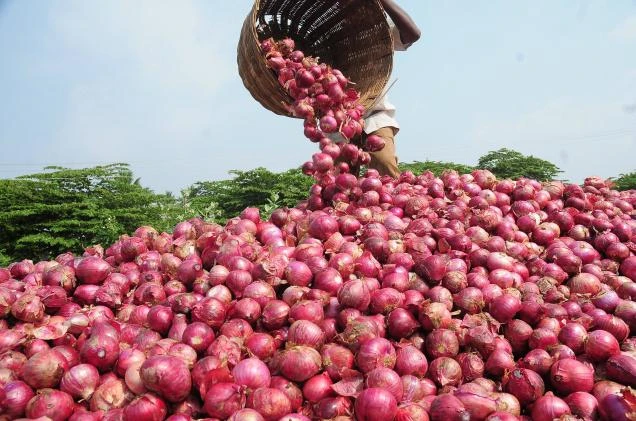
For informal Nigerian merchants moving perishable onions across West African borders, the journey is a race against time, infrastructure deficits, and bureaucracy. In April 2026, instead of offloading their goods at the Adjen Kotoku Market in Accra, their trucks became part of the sixteen vehicles seized by local Ghanaian ‘task forces’. They found themselves caught in the middle of a simmering trade war over retail rights, transforming their routine cross-border delivery into a tense standoff that highlights the immediate, devastating business impact of conflicting regional trade policies on small-scale entrepreneurs.
According to IMANI Africa, the conflict centered on allegations that Nigerian merchants were bypassing traditional wholesale roles and selling onions directly to retail consumers in smaller quantities. In response to this perceived retail encroachment, local Ghanaian youth groups and trade task forces seized sixteen trucks belonging to Nigerian nationals.
Retaliation followed swiftly from the National Onion Producers, Processors and Marketers Association of Nigeria (NOPPMAN), which suspended all onion exports to Ghana. Within forty-eight hours of this suspension, fifty-nine Ghanaian-owned trucks were left stranded at the Nigerian border. This standoff triggered a sharp increase in the price of onions within Accra, disrupting the regional food supply chain managed by the Economic Community of West African States (ECOWAS).
Data reveals a stark disconnect between regional integration policies and the realities of migration and trade. Within Ghana, only about 6% of the total work permits issued in 2015 were granted to migrants from ECOWAS countries, despite these migrants constituting a significant proportion of the immigrant population. This regulatory issue forces a massive volume of trade into the informal sector, where women historically comprise the majority of cross-border traders, navigating systemic vulnerabilities with little state protection.
Currently, an estimated $80 billion trade finance gap plagues the African continent, severely limiting the growth of Micro, Small, and Medium Enterprises (MSMEs). Furthermore, informal cross-border trade—which operates largely outside official customs recording systems—often accounts for a massive percentage of total intra-African trade, dwarfing formal figures and highlighting the immense scale of unrecorded commercial activity compared to regional benchmarks.
The structural barrier underlying these border conflicts is deeply immersed in contrasting statutory requirements, specifically Ghana’s Investment Promotion Centre (GIPC) Act 865 of 2013. Under this legislation, non-citizens seeking to engage in a retail trading enterprise must invest a minimum of $1 million in cash or goods and employ at least twenty skilled Ghanaians. For other wholly foreign-owned enterprises, the capital requirement stands at $500,000, and $200,000 for joint ventures. These figures represent an astronomical, quantifiable hurdle for the average cross-border merchant, who typically operates on marginal profits to sustain their livelihood.
This legal barrier persists largely due to protectionist pressures from local trading unions, such as the Ghana Union of Traders’ Associations (GUTA), which utilize these laws to aggressively shield domestic retailers from external competition. While the law purportedly intends to promote high-level foreign direct investment, applying multinational corporate standards to small-scale African vendors effectively criminalizes regional MSME trade. The cost is not merely financial; it creates a dangerous “shadow trade” where merchants are physically present but legally unprotected, exposing them to localized violence and impromptu confiscations.
This localized friction reveals a glaring misalignment between national laws and the ECOWAS Trade Liberalization Scheme (ETLS). The ETLS strictly mandates that goods originating within West Africa should move across borders without tariffs or quotas, conceptually granting traders the right of residence and establishment. Yet, Ghana’s domestic policy insists on applying “national treatment” strictly through the lens of its investment laws, treating an African neighbor exactly the same as a multinational corporation from outside the continent.
While the African Continental Free Trade Area (AfCFTA) envisions a unified, borderless market, its success depends entirely on harmonizing these contradictions. A proposed path forward involves leveraging existing domestic frameworks, such as Ghana’s L.I. 2470 of 2023, to create a Tiered Integration Model. This model would allow African traders to register as MSMEs under the Ghana Enterprises Agency with nominal fees, rather than facing the prohibitive GIPC requirements, actively aligning domestic policy with regional free trade frameworks.
The impact on informal cross-border traders is particularly severe, as they navigate an environment heavily securitized and prone to extortion. Small-scale traders face the brunt of border harassment, enduring arbitrary “disvirgin” passport fees for unstamped passports, and unofficial levies of around 1,000 CFA per crossing. The lack of a clear, accessible legal framework forces these traders to endure systematic abuse, directly undermining their economic viability while attempting to move highly perishable goods across borders.
Beyond statutory barriers, cross-border SMEs face a crippling lack of trade finance access, characterized by the aforementioned $80 billion gap. Institutions like Afreximbank and digital frameworks like the Pan-African Payment and Settlement System (PAPSS) aim to bridge this divide by enabling seamless, local-currency transactions. However, until MSMEs are legally recognized and permitted to formalize their operations without prohibitive capital requirements, they remain locked out of these formalized financial lifelines, unable to secure the necessary credit.
Looking ahead, the critical development to watch is the implementation of Ghana’s free visa policy scheduled for May 2026, alongside a pending bill in Ghana’s Parliament to revise the Ghana Investment Promotion Authority requirements. While the pending bill proposes eliminating minimum capital requirements for joint ventures, it alarmingly maintains the strict capital requirement for trading enterprises. To move forward realistically, policymakers must amend this legislation to integrate the Tiered Integration Model, explicitly allowing cross-border MSMEs to operate legally through manageable registration fees rather than prohibitive capital bonds. Actionable, harmonized legislation is the only sustainable solution.

