
Capital alone cannot scale a business. Without digital trade readiness, regulatory knowledge, and direct market access, African SMEs will remain trapped in localized, low-margin operations. This reality persists despite the grand opening of a single continental market.
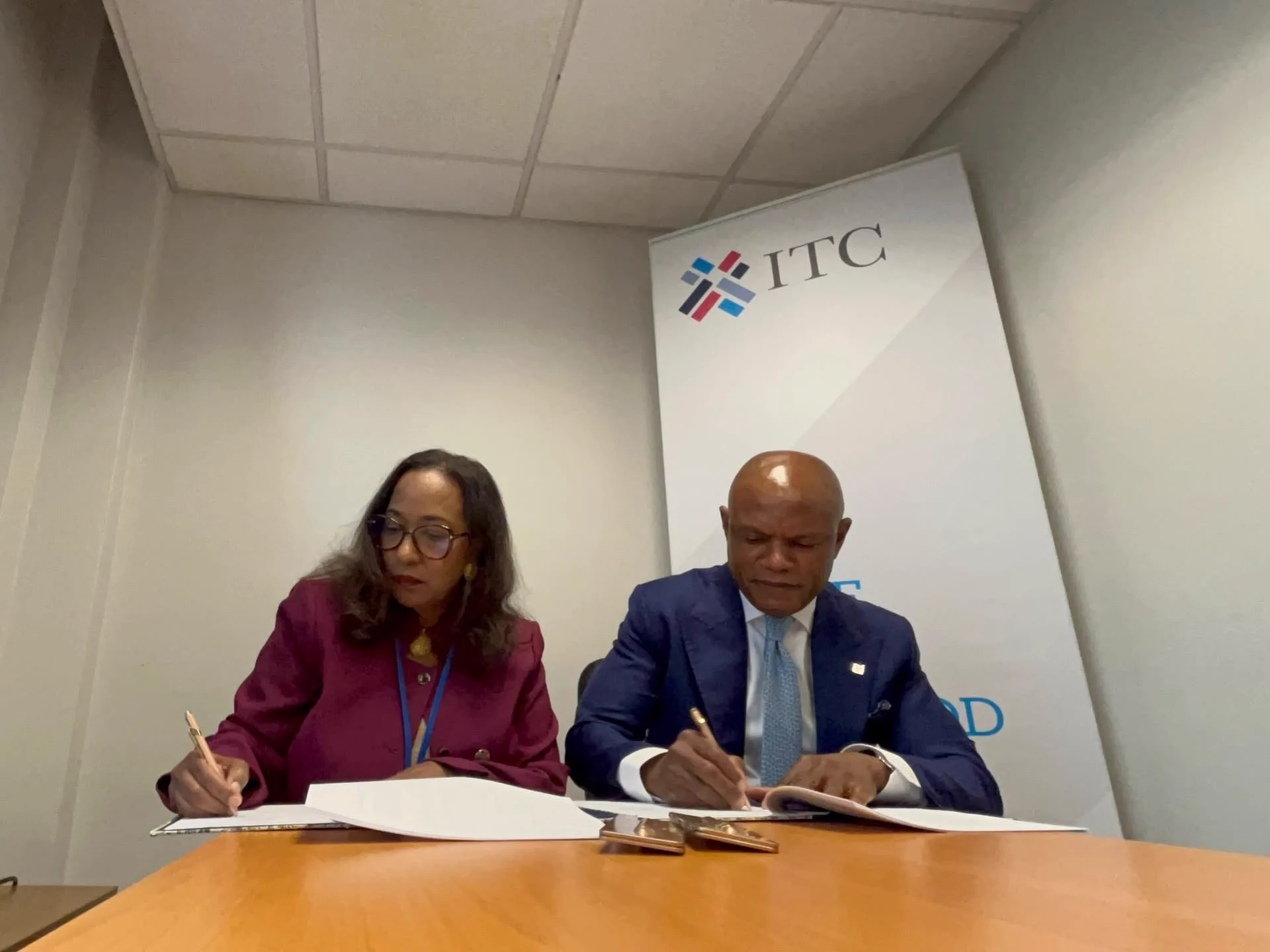
To solve this problem, the International Trade Centre (ITC) and the Access Africa Office signed a landmark Memorandum of Understanding. Executed on the sidelines of the UN General Assembly in New York, the agreement establishes a 3-year partnership across 14 African nations. Initiating with a pilot phase in Ghana running from September 2026 to June 2027, the collaboration pairs ITC’s technical training platforms with Access Bank Plc’s regional branch network. Specifically, the initiative focuses on five key pillars: job creation, access to finance, business sustainability, digital capacity building, and market expansion. Consequently, maximizing the Access Bank digital trade framework has become the primary mechanism to empower these local businesses.
Importantly, small and medium-sized enterprises (SMEs) generate over 80% of jobs across Africa. Nevertheless, they face an estimated trade finance gap exceeding $120 billion. By leveraging Access Bank’s network of over 700 branches across 25 countries and 63 million customers, the partnership aims to transition participating small businesses into trade-ready exporters across 14 target markets. These include key economies such as Angola, Botswana, Cameroon, Kenya, Rwanda, South Africa, and Zambia.
Pairing Banking Liquidity with Technical Assistance
Pairing private banking liquidity with multilateral technical assistance addresses the core structural bottleneck of African SME trade. Equipping businesses—particularly women-led enterprises—with digital marketplace skills, compliance know-how, and export readiness allows them to move beyond survival financing. As a result, they can seamlessly utilize AfCFTA tariff concessions and plug directly into regional supply chains.
However, fragmented cross-border payment systems and varying national currency volatility can still hinder execution. Stringent commercial lending collateral requirements and non-tariff barriers (NTBs) present ongoing operational challenges. If local lending criteria remain risk-averse or cross-border transaction fees stay high, small enterprises may struggle to convert skills into bankable transactions. Therefore, financial institutions must actively reform local credit policies.
Advancing Inclusivity Under the AfCFTA Framework
This agreement advances the African Continental Free Trade Area (AfCFTA) framework by directly facilitating SME inclusion and intra-African trade. It also aligns with AU Agenda 2063 targets for inclusive economic growth. Furthermore, the strategy operationalizes key UN Sustainable Development Goals, specifically SDG 5 (Gender Equality), SDG 8 (Decent Work and Economic Growth), and SDG 9 (Industry, Innovation, and Infrastructure).
Ultimately, the partnership provides structured working capital, digital trade tools, and market connections across regional corridors. For informal cross-border traders, women-led cooperatives, and micro-entrepreneurs, integrating ITC’s training model with accessible banking channels lowers the barrier to formalization. This shift effectively provides safer, regulated pathways to expand trade beyond local borders.
In conclusion, the ITC-Access Bank alliance presents a practical model for commercial-multilateral coordination under the AfCFTA. Translating the Ghana pilot into continental impact will require scaling affordable credit lines, enforcing low cross-border payment costs, and ensuring technical training leads directly to export clearance across all 14 target countries.


