
African businesses and cross-border traders face costly border delays, fragmented customs rules, and weak transport links. Consequently, regional trade remains stalled despite continental free trade commitments. To solve this, trade experts are calling for practical customs reform alongside urgent infrastructure upgrades.
Therefore, an international conference on the African Continental Free Trade Area (AfCFTA) and geoeconomics was convened from November 9 to 10, 2026. Organized by the Africa Trade Group (ATG) under the World Trade Organization (WTO) Chairs Programme, the gathering brought together policymakers, academics, and private-sector actors. Following the sessions, participants issued a joint communiqué coordinated by Ngozi Egbuna, director of ICRITR at Nnamdi Azikiwe University, Awka. Co-signed by Justin Amase and ATG coordinator Manfred Kouty, the communiqué urged governments to remove trade barriers and shift from formal agreements to practical implementation.
Behind-the-Border Friction Stalls Continental Commerce
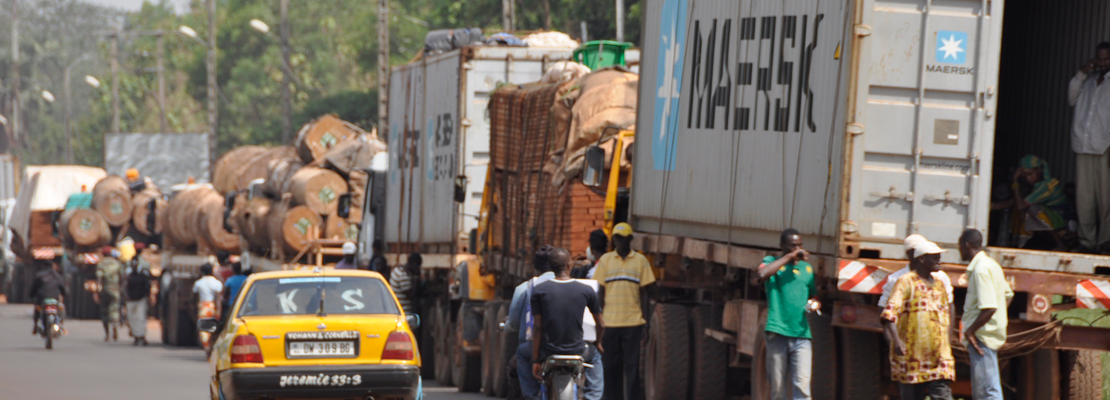
Afreximbank data from November 2026 shows that while 50 African countries have ratified the AfCFTA, only 12 are actively trading under its framework. Although intra-African trade recorded 5.5 percent growth in 2025, it still accounts for roughly 14 percent of total African trade. Meanwhile, World Bank analysis indicates that about 60 percent of estimated trade costs stem from behind-the-border and logistical constraints. For instance, customs holds average around 12 days across parts of the continent. In addition, transport costs absorb up to 40 percent of product value in Africa compared to 8 to 10 percent in Europe.
This communiqué targets the major structural barriers of fragmented customs administration and infrastructure deficits. When border clearances drag on for days, paperwork errors multiply rapidly. Furthermore, when roads, power grids, and logistics corridors underperform, goods move slowly and expensively. As a result, high transaction costs erode business competitiveness even where tariff lines are reduced.
Economic Opportunities Through Practical Customs Reform
At the same time, enacting practical customs reform and investing in physical and digital trade infrastructure creates a clear economic opportunity. Cutting clearance delays, harmonizing border procedures, and expanding regional value chains significantly lower operating costs for producers. Consequently, African firms can retain more value domestically rather than exporting raw commodities. This shift also positions the continent to navigate shifting global supply chains from a position of greater strength.
Moreover, the communiqué directly supports the operationalization of the AfCFTA and advances AU Agenda 2063 goals on industrialization and economic integration. It also intersects with trade policy monitoring across Regional Economic Communities (RECs), the WTO Chairs Programme, UNECA, and Afreximbank.
Closing the Policy Execution Gap
Even so, a persistent policy execution gap remains between signing AfCFTA agreements and delivering day-to-day operational reform at borders and ports. Turning legal commitments into measurable trade volume requires sustained political will and aligned national institutions. Governments must dedicate targeted financing for infrastructure and customs modernization rather than relying on declarations alone.
For formal manufacturers, exporters, and logistics firms, simplified customs procedures and reliable transport networks reduce compliance overhead. In turn, faster border clearances shorten delivery timelines and improve regional market access. Conversely, informal traders, micro-enterprises, and small-scale cross-border operators face steep hurdles. Complex paperwork, customs delays, and high transport costs continue to prevent them from scaling operations and formalizing their cross-border trade.
In conclusion, the conference communiqué makes clear that the AfCFTA will only deliver real economic transformation when governments back legal commitments with practical customs reform and infrastructure execution. Ultimately, sustained political coordination and targeted investment will be decisive in turning continental trade ambitions into everyday commercial activity.