
Negotiations regarding the continental trade in services will soon offer substantial benefits to West African businesses looking to export across borders. Regional policymakers are currently working to synchronize their approaches to continental trade rules. Rather than navigating a fragmented landscape of fifteen separate national regimes, service providers will see trade barriers lowered more effectively. This positive change occurs because West African nations are negotiating with the rest of Africa as a cohesive bloc.
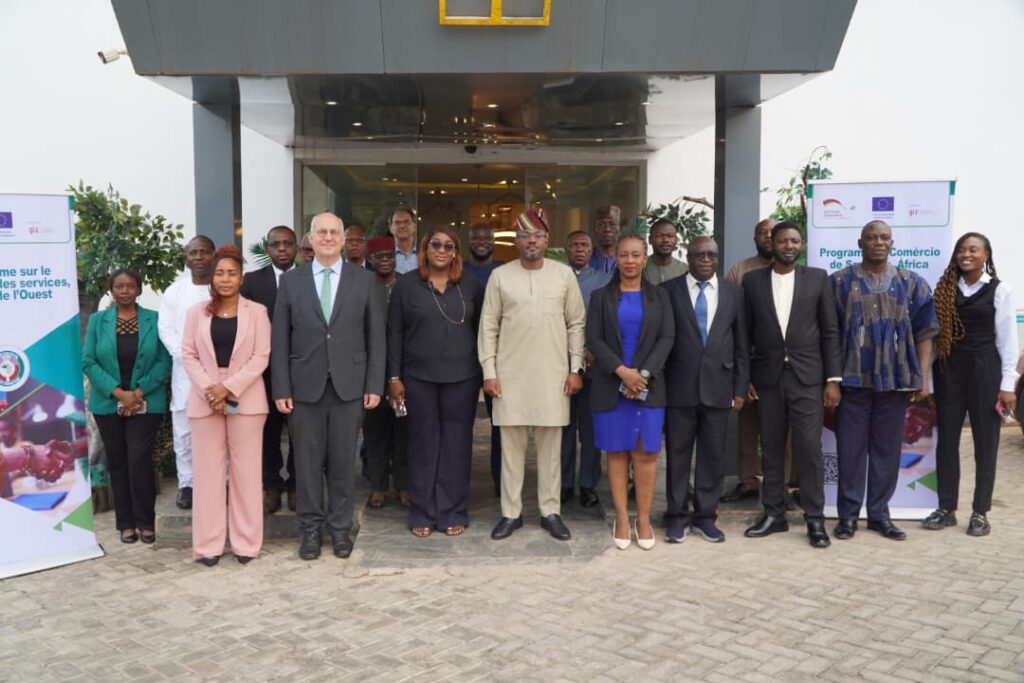
Recently, the ECOWAS Commission convened its 13th Regional Meeting on Trade in Services in Abuja, Nigeria. This high-level gathering brought together senior trade officials from ECOWAS member states and Mauritania. Continental institutions and development partners also attended the meeting.
The central objective was to advance negotiations on the AfCFTA Protocol on Trade in Services. Furthermore, the delegation successfully aligned strategic priorities ahead of the upcoming 19th Meeting of the AfCFTA Committee. Consequently, national positions are now harmonized for the talks scheduled for November 13–16, 2026.
Regulatory Obstacles Facing Trade in Services
Services represent a dominant economic engine across West Africa. However, intra-regional trade in services remains restricted by critical regulatory discrepancies. Within the 15-member ECOWAS bloc, service sectors like telecommunications, financial services, and transport face varying levels of domestic protectionism.
Comparatively, the European Union has a highly integrated single market for services. In contrast, African nations are attempting to scale this framework across a massive 54-country continental trade zone under the AfCFTA. To measure baseline regional openness, institutions like the United Nations Economic Commission for Africa (UNECA) track regulatory restrictiveness indices. These metrics clearly highlight how West African barriers stack up against global standards.
Overcoming Barriers to Market Access
This regional alignment directly creates a massive opportunity by streamlining market access rules for service firms. By harmonizing positions, the region reduces the regulatory compliance costs that cross-border service suppliers face when entering neighboring markets. Therefore, it provides a predictable operational window where regional service exporters can thrive. For instance, entities ranging from Nigerian tech startups to Senegalese logistics operators can leverage a scaled, integrated market under favorable regional rules.
However, a persistent barrier remains the slow and uneven domestic implementation of these harmonized policies. While trade officials can reach agreements during high-level meetings in Abuja, translating these continental protocols into actual national laws remains a slow, bureaucratic bottleneck. National protectionist policies and divergent licensing requirements continue to stifle real-world integration across borders. In addition, a lack of mutual recognition agreements for professional qualifications halts progress.
Operational Mechanics of the AfCFTA Protocol
This initiative sits squarely within the operational mechanics of the African Continental Free Trade Area (AfCFTA) framework. Specifically, it pushes forward the critical Protocol on Trade in Services. By coordinating through ECOWAS, the initiative respects the role of Regional Economic Communities (RECs). These communities serve as the fundamental building blocks of continental integration outlined in AU Agenda 2063.
Furthermore, this alignment bridges gaps highlighted in foundational texts like The TRALAC AfCFTA Guide. Reports from the UN ECA also emphasize that trade in goods cannot succeed without complementary liberalization in the services sectors. These vital sectors include transport, logistics, and digital payments.
For formal actors, such as corporate banks, telecom firms, and structured airlines, a unified regulatory stance lowers entry risks. Consequently, it encourages cross-border investment. Conversely, the informal sector faces distinct challenges. This sector handles the vast majority of cross-border retail trading in West Africa.
Unfortunately, informal service providers, including cross-border transport operators and small-scale clearing agents, are often left out of official regulatory designs. Without deliberate, simplified frameworks to formalize their activities, high compliance thresholds coming out of these harmonized protocols risk locking small micro-enterprises out of the formal AfCFTA economy entirely.
In conclusion, the ECOWAS-led Abuja meeting marks a vital tactical victory for West African cohesion. However, the true test of this harmonization will not be the alignment achieved at the upcoming mid-November continental committee meetings. Instead, success depends entirely on the speed at which member states domesticate these protocols into national frameworks to unlock real-world commerce.