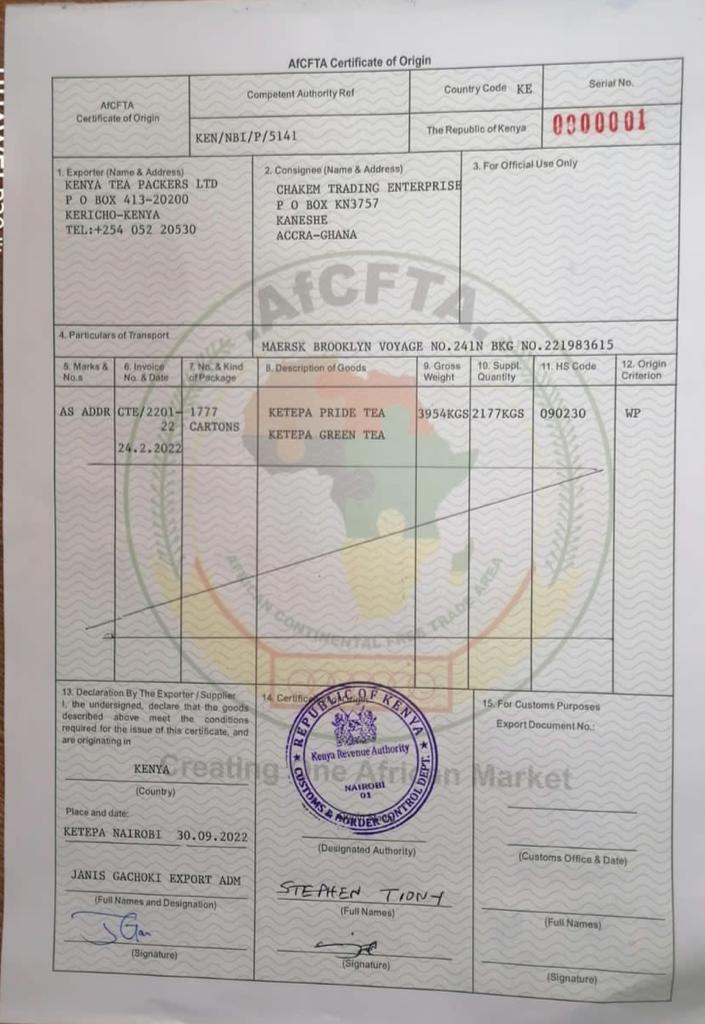
Nigerian exporters can now secure preferential continental trade documents in under 24 hours. Specifically, this automated pipeline completely bypasses the bureaucratic delays that historically stalled cross-border shipments for over a week. By digitizing the validation pipeline, local manufacturers can instantly exploit tariff-free advantages across integrating borders. Therefore, a major system upgrade drives AfCFTA trade documentation automation across the nation’s key shipping networks. The Nigeria AfCFTA Coordination Office (NACO) announced a reduction in Certificate of Origin processing times from five days down to 24 hours.
Streamlining Customs Registration via Digital Workflows
The Chief Executive Officer of NACO, Mrs. Patience Okala, attributed the acceleration to an end-to-end integration of digital workflows. These networks are managed directly by the Nigeria Customs Service (NCS). Furthermore, the agency resolved eight reported cases of non-tariff barriers at the latest coordination meeting. They also moved five regional firms into advanced funding tiers. This system upgrade shifts Nigeria into the upper tier of automated trade regimes within the $3.4 trillion continental economic bloc.
Historically, documentation delays across West Africa have averaged five to eight days. This friction added severe overhead costs to intra-African logistics. Consequently, intra-African trade has struggled to breach the 16% threshold. This reform systematically targets a severe regulatory barrier: administrative friction at the point of origin. For years, the five-day verification backlog functioned as a domestic trade bottleneck. Therefore, it generated heavy demurrage fees at ports and caused perishable goods to spoil before clearance.
Unlocking Regional Opportunities for Small Manufacturers
However, the transition to a 24-hour window unlocks an active commercial opportunity for small and medium-sized enterprises (SMEs). To capitalize on this fast track, exporters must integrate their systems with the newly deployed Nigeria Trade Hub portal. Consequently, the real opportunity lies in transforming short-cycle manufacturing into a highly flexible regional exporter network. This automation directly bridges critical enforcement gaps highlighted by the AfCFTA Digital Trade Protocol.
Led by the Minister of Industry, Trade and Investment, Dr. Jumoke Oduwole, Nigeria’s dual role legally binds its domestic frameworks to automated compliance. But legislative alignment is still catching up with these tech changes. Full operational integration remains bottlenecked because the AfCFTA Domestication Bill is still pending before the National Assembly. Nevertheless, the government must pass this bill to sustain the momentum.
Immediate Corporate Growth and the Path to Inclusion
For formal corporations, rapid documentation provides immediate predictability to scale export volume. On the other hand, informal traders face total exclusion from these fast-track benefits. Because these micro-enterprises operate without registered corporate entities, they cannot easily navigate the digital Customs interface.
In conclusion, reducing the processing window turns policy into a lean trade instrument. To finish this shift, the ultimate metric of success hinges on full legislative enforcement at the border. For more updates on digital systems, check our guide on East African market challenges.