
For a business traveler attempting to fly from Tunisia to Southern Africa, the reality of Africa’s divided skies is not an abstract policy issue—it is a grueling, 13-hour ordeal. Instead of direct routes across the continent, passengers are routinely forced to fly northward through European or Middle Eastern hubs before heading south again, paying fares that are frequently 40 to 60 percent higher than comparable routes in Europe. This logistical problem stifles trade, inflates costs, and keeps neighboring economies isolated from one another. While the ambition of a borderless African sky has existed for decades on paper, the physical journey for the average African trader remains prohibitively expensive and logistically exhausting.
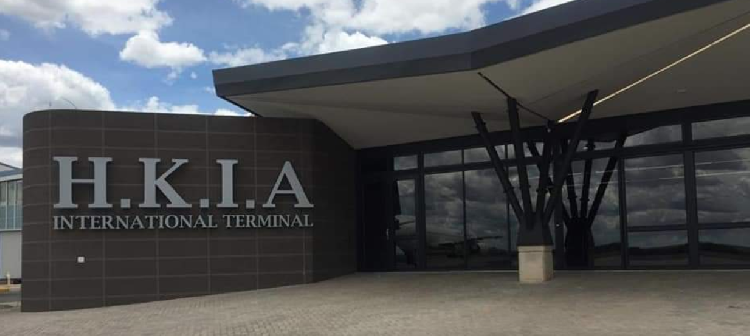
Namibia’s N$3 Billion Bet on Air Namibia
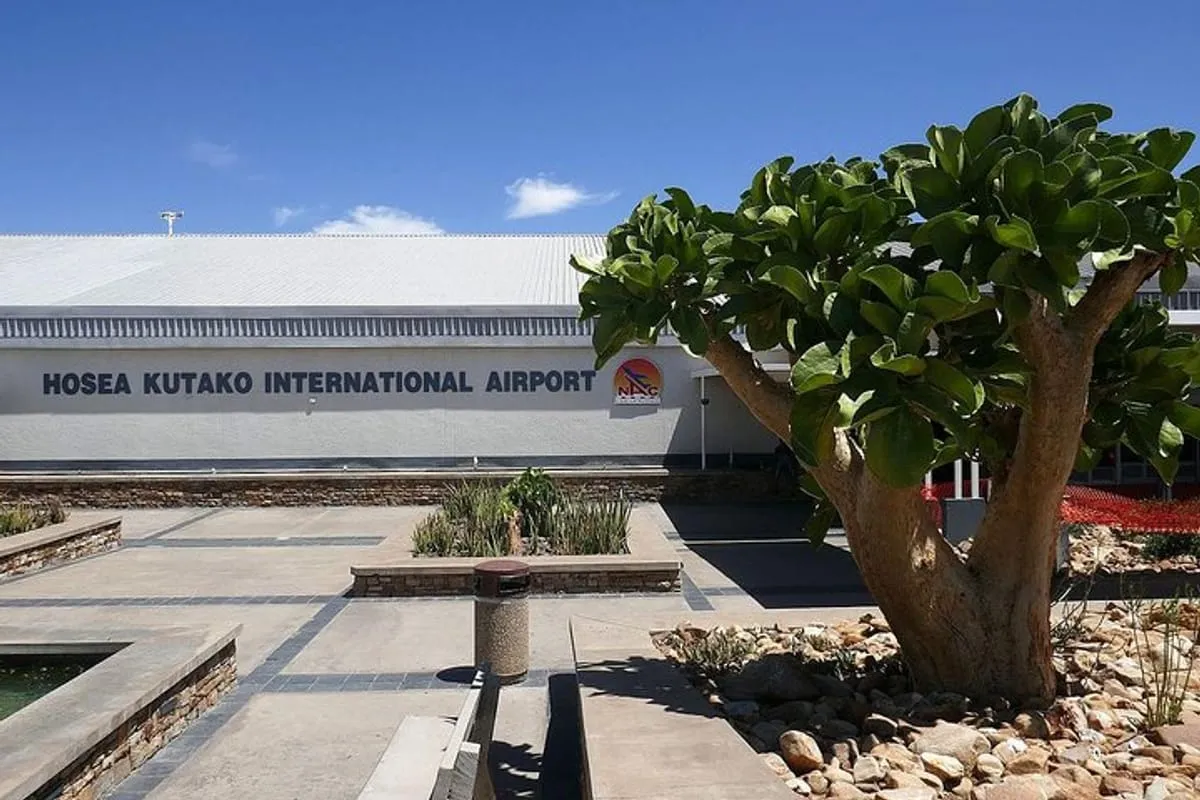
From April 21 to 24, 2026, senior government officials, regulatory authorities, and industry executives convened at the Windhoek International Convention Centre for the third edition of Aviation Week Africa. Held under the theme “Linking Africa: Partners for Growth,” the summit explicitly targeted the operational issues preventing regional integration. Representatives from the Namibia Airports Company (NAC), the Namibia Civil Aviation Authority, and military stakeholders engaged in direct negotiations to align civil and military airspace management, infrastructure development, and route expansion.
During the proceedings, NAC Chief Executive Officer Bisey Uirab and Minister of Environment, Forestry and Tourism Indileni Daniel emphasized the urgency of transforming airports from isolated outposts into integrated economic nodes. The discussions transcended routine policy declarations, directly addressing the implementation of the Single African Air Transport Market (SAATM) and establishing frameworks for cross-border cooperation. Concurrently, the Namibian government continues to lay the groundwork for the 2026 relaunch of Air Namibia, signaling a tangible commitment backed by a projected N$3 billion investment to reclaim its share of the regional aviation market.
The summit in Windhoek takes place as the continent continues to deal with significant structural gaps in its connectivity. Despite housing 1.3 billion people, Africa contributes a mere 2 percent to global passenger air traffic. The African Airlines Association (AFRAA) projects that African carriers will transport 137.3 million passengers in 2026, making it the fastest-growing aviation region globally. Yet, this growth exposes a stark vulnerability: non-African airlines currently command a dominant 67.1 percent market share on intercontinental routes operating into and out of Africa.
Within the continent, connectivity is hindered by protectionist policies favoring national flag carriers at the expense of market efficiency. Third and fourth freedom rights allowing flights between an airline’s home base and another country account for 78 percent of intra-African capacity. However, fifth freedom rights, which permit airlines to carry revenue traffic between two foreign countries as part of a continuing flight, represent only 22 percent of capacity. This regulatory hesitation prevents the development of logical, multi-stop routes, essentially starving the continent of the network density required to lower operating costs.
The financial data illustrates the sheer scale of this missed economic opportunity. According to the International Air Transport Association (IATA), full implementation of SAATM could increase intra-African traffic by 51 percent while reducing passenger fares by 26 percent. In Namibia alone, liberalizing air transport stands to generate an additional 10,600 jobs and inject US$94.2 million annually into the national gross domestic product. Currently, African carriers operate with razor-thin margins; IATA forecasts an average net profit of just $1.30 per passenger for African airlines in 2026, contrasting sharply with the global average of $7.90. Operations are severely inflated by taxes, fuel surcharges, and high cargo handling fees that can exceed US$100 per shipment in West Africa, compared to roughly US$30 in European markets.
The Windhoek summit serves as a critical pressure test for SAATM commitments. While 38 African states have signed the SAATM declaration and 26 have executed Memoranda of Implementation, actual progress has stalled at the border of political will. The African Civil Aviation Commission (AFCAC) notes the development of over 110 new intra-African routes since 2018, including 19 under fifth-freedom services, but the promised connectivity surge remains hindered by lingering state protectionism. The discussions in Namibia advance SAATM by moving past theoretical commitments to practical capacity-building, such as integrating civil and military airspace management to reduce flight times and fuel consumption. Yet, as long as key markets fear liberalized skies will cripple their local carriers, SAATM will function as a patchwork rather than a true single market.
Looking ahead, the most consequential upcoming development for regional connectivity will be the execution of Air Namibia’s phased relaunch in 2026. With an initial focus squarely on regional routes deploying fuel-efficient Airbus A220 aircraft, the airline’s return will test whether a resurrected state carrier can thrive in a highly competitive Southern African market.
Additionally, the rollout of an online monitoring system for SAATM compliance, spearheaded by the UN Economic Commission for Africa (ECA) and AFCAC, will be a crucial benchmark to track.
For African aviation to evolve from a divided network into an engine for the African Continental Free Trade Area (AfCFTA), governments must immediately pivot from protectionism to pragmatism. States must fully adopt the ECA’s digital monitoring system to ensure transparency in granting fifth-freedom rights. Furthermore, instead of viewing aviation merely as a source of tax revenue, governments must harmonize airport charges and eliminate excessive levies that currently act as non-tariff trade barriers. By prioritizing infrastructural integration and embracing private-sector partnerships, African nations can finally transform the continent’s airspace from a barrier into a bridge.