
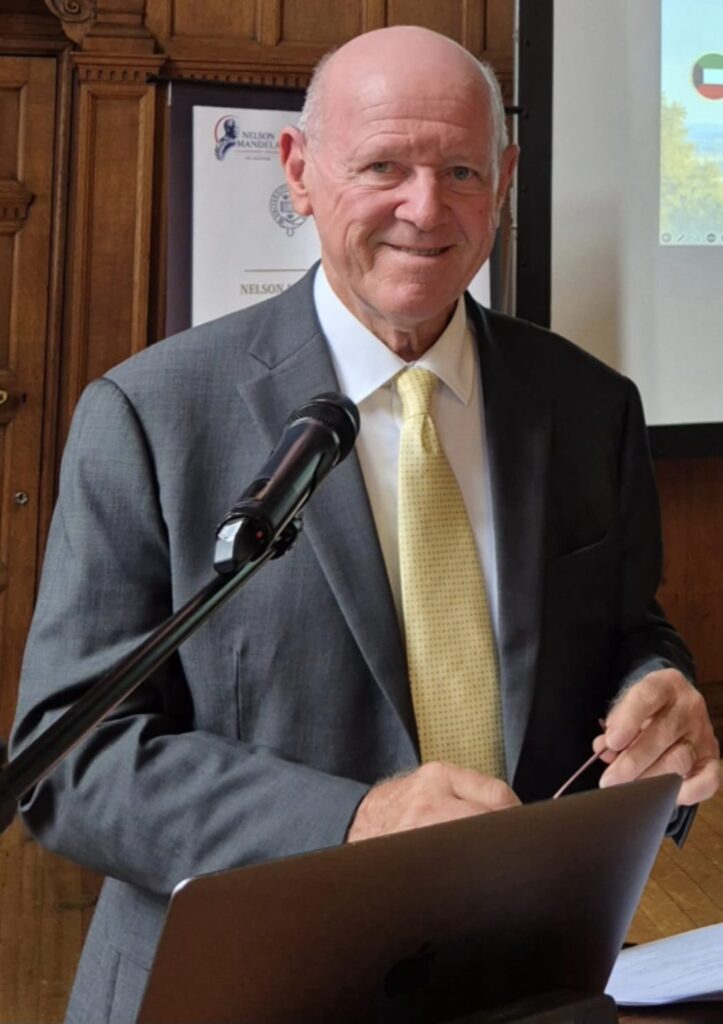
What if the most powerful diplomacy of our time happens over a shared meal instead of an official summit table? Specifically, a major presentation at an international summit highlights how travel builds peace. Ambassador Dr. Alain St.Ange of the Seychelles challenged global delegates to look beyond mere arrival numbers. He argued that true international exchange relies heavily on cultural diplomacy through tourism. Speaking at the Oxford Global Diplomat Summit on September 7, 2026, St.Ange made the case that travel deserves to be understood as far more than a simple economic sector.
Massive Global Numbers and Grassroots Reality
St.Ange opened with global tourism figures that few could ignore. The World Travel and Tourism Council forecasts that in 2026, travel will contribute around $12 trillion to the global economy. This massive sum represents almost 10 percent of global GDP. Furthermore, the sector supports roughly 376 million jobs worldwide. Nevertheless, he pushed past these giant statistics to look at real human connections. Behind every international arrival is a person crossing a border and encountering an unfamiliar culture.
Therefore, this human connection can successfully challenge deep public prejudice. A visitor discovers a nation through individual stories rather than government announcements. St.Ange linked this process to a broader argument about regional connectivity. Improved air links and digital infrastructure do far more than move holidaymakers. Instead, they connect local businesses to international markets and students to universities.
High Stakes for Island Economies
For small island states, the economic stakes of this connectivity remain exceptionally high. For instance, World Bank figures show that 21 percent of Seychelles’ GDP is concentrated in tourism industries. Consequently, national prosperity is visible every day in the livelihoods of hotel workers, fishermen, and farmers. But state leaders must rethink what true success looks like. Visitor numbers matter, yet communities must track how much financial value actually stays home.
Tourism depends heavily on the very natural resources it can destroy if poorly managed. For example, a hotel can be built in a few years, but a coral reef takes generations to develop. Thus, environmental protection is not the enemy of economic ambition. It is the core condition for long-term growth. Destinations must create more financial value while placing less pressure on local biodiversity.
Empowering Local Communities
On the other hand, local communities cannot remain passive spectators in their own industry. They must participate as business owners and active decision-makers. Culture belongs first to the people who live it daily.
In conclusion, tourism asks us to cross physical borders when the world encourages us to retreat. To finish this global shift, difference must be protected. For more updates on regional border rules, check our guide on East African market challenges.


