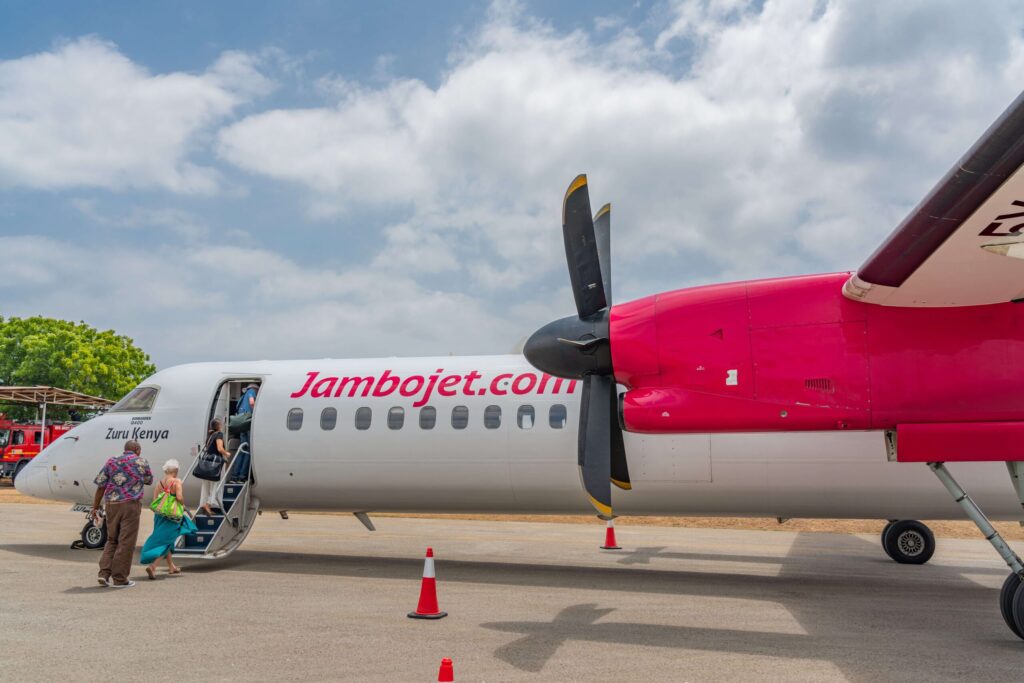
On August 20, 2026, at a stakeholder meeting at Kampala’s Sheraton Hotel, Kenyan low-cost carrier Jambojet announced it will resume daily flights between Nairobi and Entebbe starting October 1, 2026. The carrier, owned by the Kenya Airways Group, suspended this route in 2020 during the COVID-19 pandemic. Utilizing De Havilland Canada Dash 8-Q400 turboprop aircraft, the daily service will depart Jomo Kenyatta International Airport in Nairobi at 11:30, arriving at Entebbe International Airport at 13:00, with the return flight scheduled for 13:40. One-way fares start at approximately $170 (or KES 22,950), a major shift for a route currently served by full-service airlines like Kenya Airways, Uganda Airlines, and Safarilink.
Breaking Barriers in East African Aviation
Within the broader African context, the Nairobi-Entebbe corridor is traditionally classified among the most expensive short-haul journeys relative to distance. In 2026, passenger traffic between Kenya and Uganda is projected to reach approximately 300,000 travellers. Yet, despite equivalent populations in parts of Europe or Asia enjoying hundreds of budget flight options, African skies remain heavily fragmented. State-backed carriers like Uganda Airlines, which recently expanded via government funding, often dominate these corridors, keeping air travel a luxury.
This resumption directly addresses a long-standing economic barrier: the artificial isolation of East African cities due to prohibitive airfares. For years, high travel costs have persisted due to limited carrier options and elevated fare structures across regional airspace. With its budget model, Jambojet is not merely competing for existing passengers but expanding the market. It remains uncertain, however, whether the airline can maintain these low fares long-term while managing tight regional cost structures.
Unlocking Trade and Tourism Ahead of AFCON 2027
Simultaneously, the route creates a major regional opportunity. With daily cargo and parcel operations, small businesses gain rapid freight options, while travel agents can design multi-country tourism packages. For example, travellers can easily link Uganda’s gorilla tourism with Kenya’s coastal destinations like Mombasa and Diani.
This connectivity is particularly vital ahead of the 2027 Africa Cup of Nations (AFCON), which will be co-hosted by Kenya, Uganda, and Tanzania, demanding unprecedented regional mobility. Ultimately, Jambojet’s return is a hopeful step toward a unified East African sky. Whether institutions will match this private-sector momentum by accelerating SAATM reforms remains the critical question. To track how these changes impact regional commerce, view our aviation industry insights or check the latest schedules on the Jambojet Portal