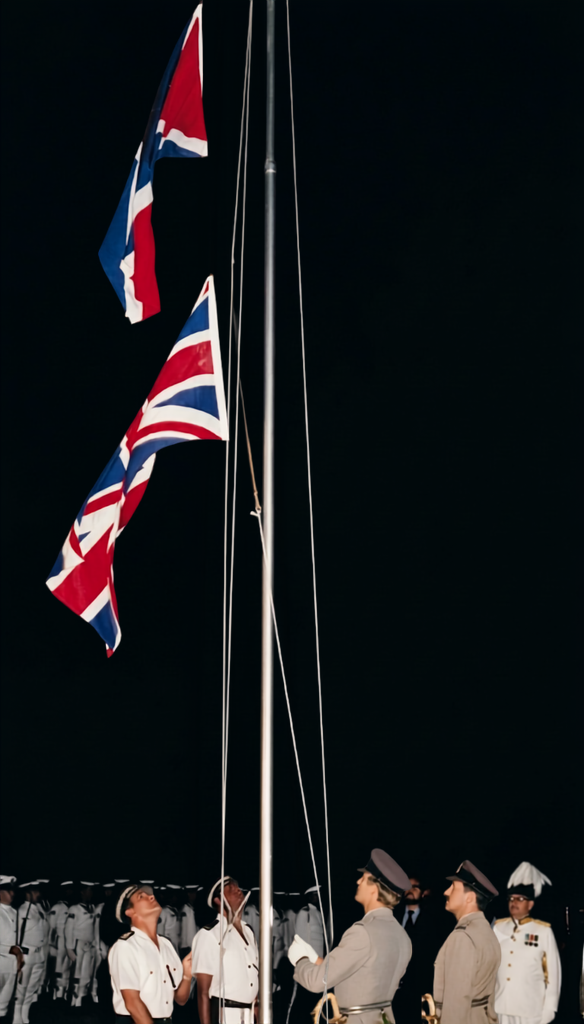
The official Seychelles 50th independence anniversary begins on June 29, 2026, as the island nation marks its historic golden jubilee. Originally, Seychelles gained its freedom from Great Britain on the 29th of June 1976. The territory officially became a sovereign republic after enduring 165 years of British rule. This milestone occurred because the Seychelles Democratic Party (SDP) of James Richard Mancham joined the Seychelles People’s United Party (SPUP) of France Albert René to form a new coalition government. Consequently, James R. Mancham took office as the Republic’s first President, while France Albert René served as the first Prime Minister.

As part of this historic freedom agreement, the United Kingdom gave the Aldabra Islands, Farquhar Islands, and Desroches Island back to Seychelles. Previously, the British government detached these islands to form the British Indian Ocean Territory (BIOT). Leaders held the official ceremonies in Victoria, which is the capital city of the Seychelles. Furthermore, the Duke and Duchess of Gloucester attended the events to represent Queen Elizabeth II. Today, sitting President Dr. Patrick Herminie will lead the modern celebrations for this highly anticipated Seychelles 50th independence anniversary.
Historical Milestones of the Seychelles 50th Independence Anniversary
Leaders finalized the strategic timeline for the modern Seychelles ‘ 50th independence anniversary in January 1976. During that time, delegates organized a third Constitutional Conference at Marlborough House in London to decide the terms of separation. The British Governor of Seychelles, Collin Hamilton Allen, attended this crucial meeting. James R. Mancham and France Albert René also joined the talks alongside a delegation from the local Legislative Assembly.
However, the political landscape in Seychelles before independence evolved with great difficulty. As a British colony, the islands had a population mix that featured a large majority of French landowners. This group created a conflict of opinions with both the French department era and the British rulers. Therefore, the road to freedom required constant negotiation.
Colonial Tensions and early Legislative Elections
In November 1903, Seychelles became a crown colony with its own Governor, Executive, and Legislative Councils. Unfortunately, the colonial system offered very little political participation to the local population. Because of this restriction, citizens formed the Seychelles Taxpayers and Planters Association in 1939. The British government categorized this group as the first official political party on the islands. The association fought hard to win a degree of autonomy for the territory. Specifically, they forced the Governor to focus on the needs of local taxpayers who formed the economic pillar of the islands.
The Political Awakening of the 1960s
Historians describe the early 1960s as a time of political awakening for the population. On April 9, 1963, Rifned Jumeau formed the Seychelles Islanders United Party (SIUP). This group wanted to improve public welfare and take democratic action to raise the standard of living.
The following year, citizens witnessed the creation of two rival political parties. France Albert René led the Seychelles People’s United Party (SPUP), which demanded immediate independence from Great Britain. In contrast, James R. Mancham led the Seychelles Democratic Party (SDP), which preferred integration with Great Britain. The intense rivalry between these two groups dominated local politics throughout the 1960s and 1970s. However, this fierce competition ultimately led to the Seychelles ‘ 50th independence anniversary that citizens celebrate today.
The Dawn of the Republic: Achieving Sovereign Statehood
New constitutional reforms in 1967 brought about the first general elections under a system where every adult could vote. The changes also increased the number of elected seats in the legislature from five to eight. Additionally, the reform established a single Governing Council to handle both lawmaking and executive decisions.
During these elections, James Mancham’s party won four seats, while France Albert René’s party secured three seats. Dr. Hilda Stevenson-Delhomme won the final seat as an independent candidate. To review the original sovereignty declarations, visit the Seychelles National Archives Digital Portal.
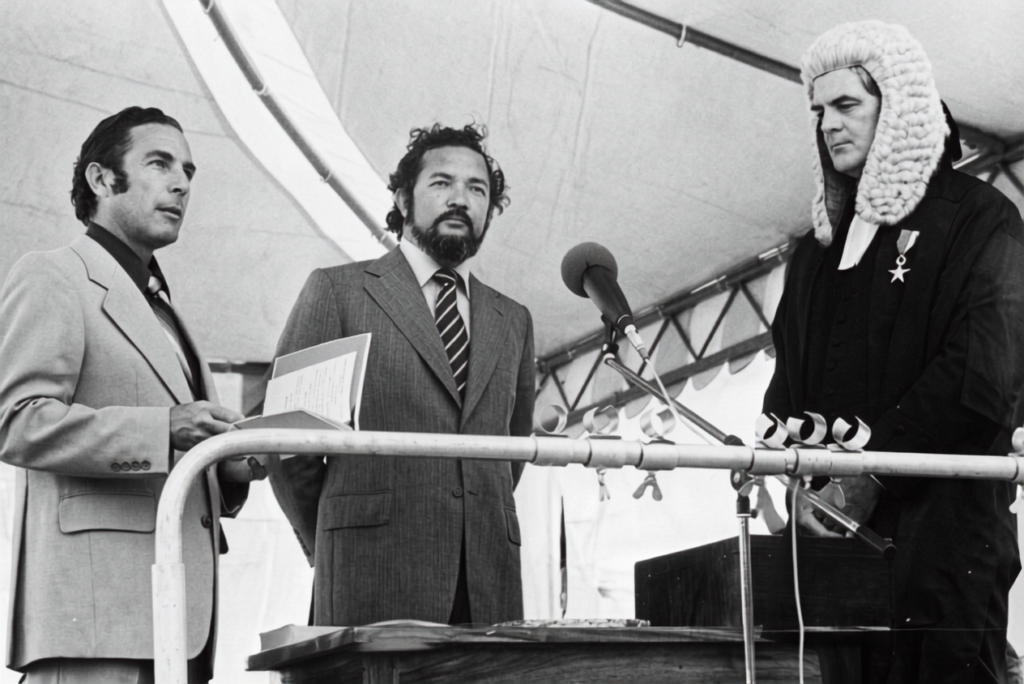
In 1968, the House of Commons in London formally discussed the issue of independence. The next year, Lord Shepherd arrived in Seychelles as the Minister of State for Foreign and Commonwealth Affairs to meet with both party leaders. From that moment on, citizens knew the colony would soon achieve full freedom.
Therefore, delegates held a conference at Marlborough House in March 1970 to write a new constitution. The document provided for an 18-member Legislative Assembly. In the elections that followed, the SDP won ten seats, and James Mancham became the first Chief Minister.
Between March 14 and 24, 1975, a second conference took place in London. By June 1975, the two rival parties formed a unified coalition government. Seychelles entered self-government in September of that year, and James Mancham became the Prime Minister.
Finally, Governor Collin Hamilton Allen attended a third conference in January 1976 to seal the transition. In this final meeting, leaders chose June as the official month for independence. On June 29, 1976, Seychelles achieved its freedom and became a Republic. The total population at that time included 60,504 inhabitants. Today, as the country honors its past during the Seychelles ’50th independence anniversary, President Dr. Patrick Herminie will lead the islands into a new chapter of liberty.