
Utilizing a strategic Bilateral Air Services Agreement ensures that crossing the border between the neighboring capital cities of Lusaka and Luanda no longer requires a passenger to endure circuitous routing through extra-continental hubs or distant regional airports. What should be a straightforward geographic hop routinely resulted in a multi-day ordeal characterized by prohibitive fares and exhausting layovers. This restoration of the Luanda-Lusaka air corridor shifts Southern African mobility from an exhausting, expensive logistical situation to a practical, same-day journey. It directly links two major neighboring capitals without the costly detour of an extra-continental or distant regional hub, finally aligning physical geography with accessible human connectivity.

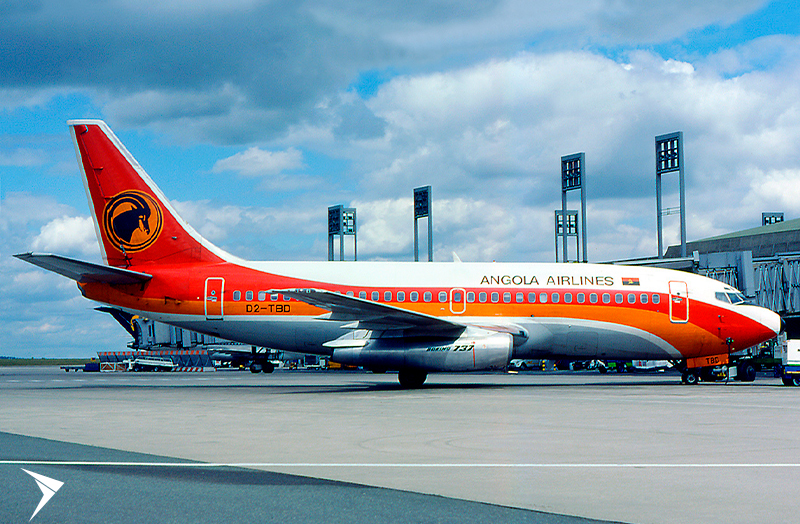
This development was cemented when the Zambia Civil Aviation Authority (ZCAA) confirmed that TAAG Angola Airlines will officially resume direct flights into Lusaka by the end of October 2026. This resumption was verified following formal discussions between TAAG officials and ZCAA Director General Captain Derrick Luembe at the civil aviation headquarters in Lusaka, where the commitment to intra-African travel was explicitly reaffirmed. Operating out of TAAG’s newly established hub at the Dr. Antonio Agostinho Neto International Airport, which opened in early 2024, this route represents a calculated step in the Angolan flag carrier’s broader strategy to consolidate its continental network before expanding long-haul services to Europe, Asia, and the United States.
Financial Metrics of the Bilateral Air Services Agreement
To support this regional expansion, TAAG is actively modernizing its fleet capabilities, having recently taken delivery of the first of four planned Boeing 787 Dreamliners. These fuel-efficient widebody aircraft are designed to increase capacity while maintaining the operational reliability necessary for inter-capital routes. Currently operating eleven domestic and twelve international destinations, TAAG’s re-entry into the Zambian market builds upon existing cooperative frameworks, including a December 2025 codeshare agreement with South African Airways that already allows TAAG expanded access to Lusaka via third-party routing.
The empirical projections for this route highlight a market primed for rapid expansion. Based on industry assessments from April 2025, the implementation of this Bilateral Air Services Agreement will generate an estimated 624 annual flights between Lusaka and Luanda, which translates to a massive 140% increase in available passenger capacity for the region. Financially, the enhanced flight frequency is projected to inject a direct annual revenue boost of $43.1 million into the aviation sector, driving a comprehensive total economic impact calculated at $142.1 million as it stimulates related industries, tourism, and cross-border commerce.
The re-establishment of the Luanda-Lusaka route addresses a glaring historic gap in Africa’s air connectivity network, where neighboring nations frequently lack direct transport linkages despite sharing vast borders and economic interests. While landlocked Zambia and coastal Angola possess highly complementary industries across mining, agriculture, and tourism, their physical integration has lagged significantly. Compared to equivalent populations in Europe or Southeast Asia, where adjacent capitals enjoy multiple daily flight options, Southern Africa remains overly reliant on a rigid hub-and-spoke model centralized in South Africa or East Africa. This forces intra-regional travelers to fly away from their destination before connecting back, inflating both travel times and ticket prices.
Infrastructure Corridors and Fifth Freedom Trafficking Rules
The timing of this route launch is strategically significant, as it capitalizes on the political momentum of a mutual visa-free travel agreement implemented between the two nations, which currently permits 90-day tourist and 30-day business stays. Furthermore, as both nations are heavily invested in the $1.32 billion Lobito Corridor rail project designed to link Zambia’s Copperbelt to Angola’s Atlantic coast, the need for rapid human mobility between the two countries has never been higher. To examine standard international flight paths and cross-reference integration metrics across different economic blocs, you can consult the International Civil Aviation Organization global portal to track state policies.
While the railway handles bulk freight, the direct air route is crucial for moving the investors, specialized technicians, and time-sensitive cargo required to execute these multi-national infrastructure projects.
Crucially, the agreement grants participating airlines fifth freedom traffic rights, allowing them to carry passengers and cargo from Lusaka to Luanda and onward to third-country destinations. This specific provision places the Angolan-Zambian deal at the forefront of implementing the Yamoussoukro Decision and the Single African Air Transport Market (SAATM). Rather than waiting for a continent-wide consensus to fully materialize, this bilateral move proves that progressive states can operationalize SAATM principles immediately to facilitate the free movement of passengers and cargo.
The immediate development to monitor is TAAG Angola Airlines’ official loading of commercial inventory and exact flight schedules into global distribution systems ahead of the October 2026 launch. While the diplomatic and regulatory framework is secure, African aviation is historically affected by routes that launch with political fanfare only to collapse under operational inefficiencies. To ensure commercial sustainability, aviation authorities and logistics operators in both nations must proactively synchronize the customs processing of air freight with the broader Lobito Corridor supply chain. By integrating efficient belly-cargo operations with streamlined passenger processing, TAAG can turn this restored route from a diplomatic victory into a durable engine for Pan-African economic growth.

