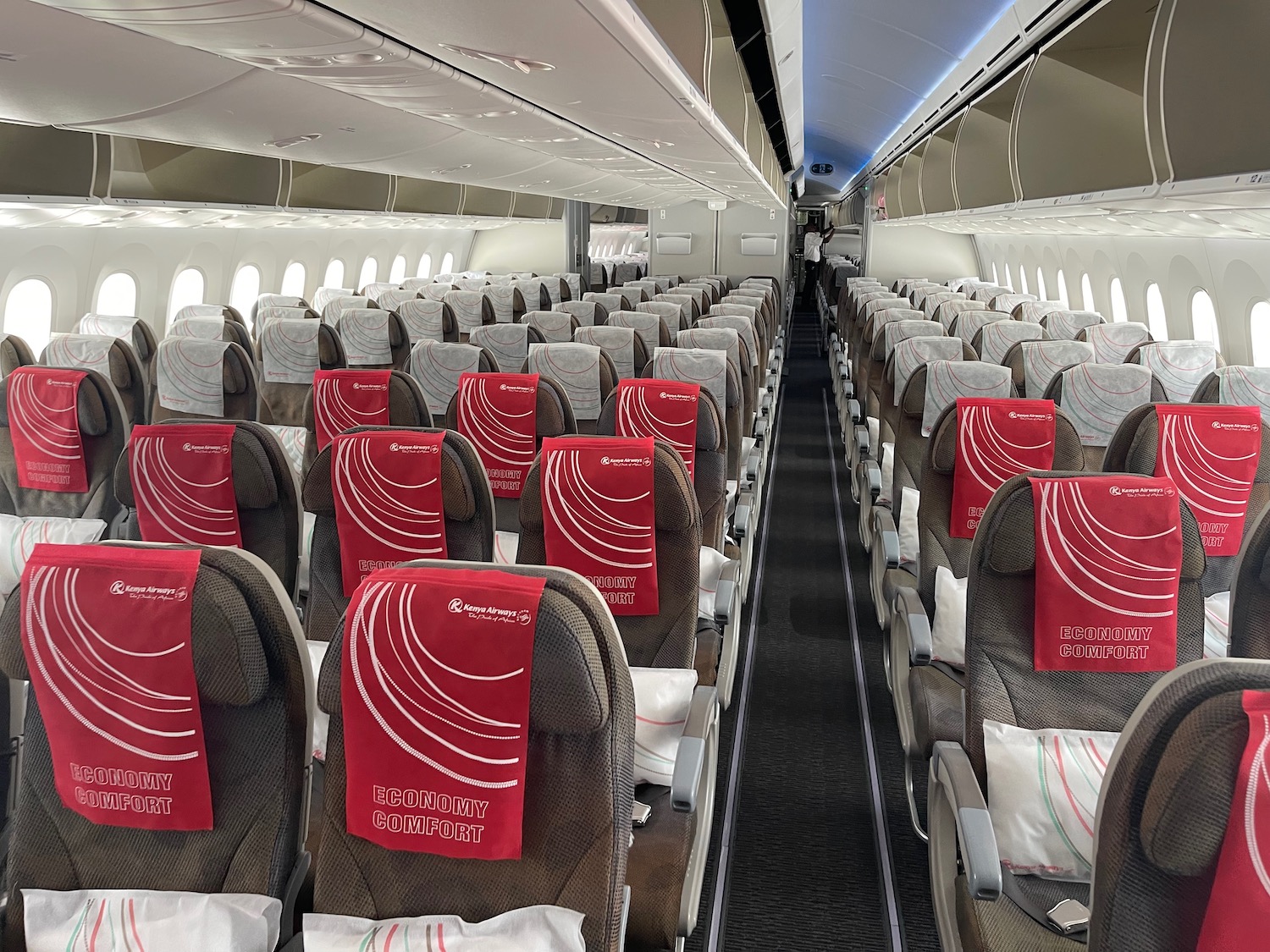
East Africa has solidified its status as the continent’s most resilient hub for both international and intra-regional travel, driven by a 22.3% increase in Kenya airline seat capacity and the strategic development of Nairobi’s flight operations.

Historically, traversing major African cities was a protracted and costly endeavor characterized by steep ticket prices and convoluted connections. Business travelers and tourists often found themselves forced to transit through Europe or the Middle East simply to reach another destination within the continent. This paradigm is shifting as the expansion of direct flights and new regional routes transforms intra-African travel into a primary engine for economic development. Despite global headwinds such as rising fuel costs and geopolitical instability, African aviation efficiency is improving, anchored by the growth of major airport hubs.
The “Africa in the Air” white paper, published by the African Travel and Tourism Association (ATTA) and OAG in March 2026, highlights a significant expansion in international seat capacity across the continent. Between January and October 2026, Africa scheduled 182.4 million departure seats—a 13.7% rise from the 160.4 million seats recorded during the same timeframe in 2025. This regional surge stands in stark contrast to a 2.1% global decline in seat capacity, which was driven by operational uncertainties and airspace disruptions.
Market Data Behind Kenya Airline Seat Capacity
Kenya stands at the forefront of this continental progress. According to ATTA data, the total Kenya airline seat capacity reached 10.2 million in the first ten months of 2026.
In the past, traveling between major African cities was often a long and expensive process, with high ticket prices and complicated flight connections. For example, a business person traveling from West Africa to Nairobi or a tourist wanting to visit both Kenya and Rwanda often had to fly out of Africa to Europe or the Middle East just to get back to another part of the continent. However, this is starting to change. More direct flights are being added, new regional travel routes are opening up, and traveling within Africa is now being seen as a key way to grow the economy. Even though the global airline industry is dealing with issues like high fuel costs and international conflicts, travel within Africa is becoming more efficient. This change is being led by major airport hubs that continue to grow despite global economic challenges.
According to the “Africa in the Air” white paper released by the African Travel and Tourism Association (ATTA) and OAG at the ITB travel trade show in March 2026, international airline seat capacity across Africa has expanded substantially. Between January and October 2026, the continent scheduled 182.4 million departure seats, representing a 13.7% increase compared to the 160.4 million seats available during the same period in 2025. This localized growth contrasts sharply with broader global trends; data produced by ATTA in collaboration with Data Appeal and Mabrian shows that globally, airlines reduced seat capacity by 2.1% in response to airspace disruptions, operational uncertainties, and rising insurance costs.
Infrastructure and Challenges Facing Regional Routes
Kenya has emerged as a central pillar of this continental expansion. The ATTA data reveals that the localized Kenya airline seat capacity surged by 22.3%, reaching 10.2 million seats for the first ten months of 2026. This aggressive growth is supported by strategic operational decisions, such as Kenya Airways’ resumption of daily flights on the Nairobi-Dubai route, reinforcing Nairobi’s position as a primary gateway linking Africa to Europe, Asia, and the Middle East. Simultaneously, African carriers recorded an 11.7% increase in passenger growth in early 2026, significantly outpacing global averages, while the continent’s air cargo demand surged by more than 18%, marking the fastest growth rate worldwide.
This expansion sits within an African aviation landscape that has historically struggled with fragmentation but is now demonstrating tangible momentum. Data from the International Air Transport Association (IATA) underscores this trajectory, noting that passenger demand in Africa grew by 9% between January and April 2025, more than double the global average of 4%. While North Africa leads in absolute volume with 71.1 million seats scheduled for 2026, Eastern Africa is driving the fastest regional growth, recording a 24.3% jump to reach 46.5 million departure seats. This growth is increasingly supporting multi-destination tourism packages, integrating Kenya, Rwanda, Tanzania, and South Africa into high-value regional circuits for international travelers.
However, this progress is threatened by severe external pressures and uneven internal infrastructure development. The escalation of conflict in the Middle East drove average jet fuel prices from approximately 67 cents per liter in February 2026 to over $1.30 by early May. Consequently, while major hubs like Nairobi, Addis Ababa, and Johannesburg expand, vulnerabilities persist elsewhere. Turkish Airlines recently suspended or reduced routes to 10 African destinations for the 2026 summer season—including Gabon, Mali, Zambia, and the Democratic Republic of Congo—citing operational costs. This situation shows that while travel links are getting better in some key areas, the rest of the continent still struggles because it depends on unstable global supply chains and changing fuel prices.
According to ATTA’s March 2026 report, Europe remains Africa’s largest external aviation market, with more than 50.7 million inbound seats scheduled for 2026, reflecting a 5.6% growth. Ethiopia achieved a massive 31.2% capacity increase to 17 million departure seats, making Ethiopian Airlines the continent’s largest international carrier with 23.8 million seats scheduled from January to October 2026. South Africa continues to dominate intra-regional volume with 24.6 million seats, recording a 19.1% overall capacity growth to 35.5 million seats. Furthermore, 70 non-African countries are expected to operate direct flights to Africa in 2026, feeding into an intra-African network that is forecast to exceed 112 million seats this year, up 6.6% year-on-year.
Intra-African Routes Double as New Flights Fast-Track Continental Connectivity
This localized aviation surge is occurring largely despite the delayed implementation of the Single African Air Transport Market (SAATM), rather than because of it. While the Yamoussoukro Decision of 1999 theoretically grants first through fifth freedom transit rights to African airlines, regulatory bottlenecks, exorbitant airport taxes, and protectionist policies continue to constrain full liberalization. Kenya’s capacity growth demonstrates that targeted bilateral agreements and strategic hub investments can drive connectivity in the interim. Yet, true pan-African efficiency requires strict adherence to SAATM’s core provisions. The African Civil Aviation Commission (AFCAC), as the executing agency, must enforce the elimination of capacity restrictions and foster fair competition to prevent market dominance by a few legacy carriers, a recurring concern raised by smaller operators in Uganda and Nigeria.
To sustain this momentum, African policymakers must transition from theoretical agreements to actionable operational reforms. Governments must systematically reduce the prohibitive airport taxes and fees that artificially inflate intra-African ticket prices, while utilizing frameworks like the Cape Town Convention to lower financing costs for fleet modernization. Furthermore, states must emulate successful visa-relaxation models such as Algeria’s visa-on-arrival scheme, which boosted international tourism numbers by 10% in 2024 to remove non-physical barriers to movement. Finally, investments must be channeled into public-private infrastructure partnerships that expand airport capacity without burdening national debts. Only by harmonizing these regulatory and physical infrastructures can Africa convert its current aviation resilience into long-term, equitable economic growth.
Looking ahead, industry observers must monitor the structural development of Ethiopia’s $12.5 billion Bishoftu International Airport initiative alongside expanding regional fleets to determine the long-term sustainability of this transport boom.