
South Africa and Angola have agreed to scrap the capacity and frequency limits that have long governed passenger and cargo flights between the two countries. The change came into effect on March 24, 2026, following a working visit by South Africa’s Tourism Minister Patricia de Lille to Luanda, and it is more significant than it might appear on paper.

For years, airlines operating between the two countries had to work within tight regulatory boundaries that restricted how many flights they could operate and how much cargo they could carry. Those limits are now gone. Airlines have the freedom to increase frequencies, expand routes, and scale cargo operations without seeking individual approvals for each move.
What the Visit Actually Produced
De Lille’s trip to Luanda was not a goodwill tour. It was a structured working visit built around the theme “Growing the Travel Economy between South Africa and Angola,” and it ended with two concrete outcomes.
The first was the aviation agreement itself. The agreement effectively liberalises air access between South Africa and Angola, allowing airlines greater flexibility to increase flight frequencies and expand cargo operations without previous regulatory constraints.
The second was the signing of a three-year Action Plan on Tourism Cooperation covering 2026 to 2029. The plan sets out shared priorities across three areas: tourism investment, joint destination marketing, and skills development. The aviation change is the backbone of all three, because none of them work properly if getting between the two countries remains difficult or expensive.
It is worth understanding who Angola actually is in South Africa’s tourism picture before dismissing this as a routine bilateral agreement.
Angola is the second-largest economy in SADC and remains a key source market, recording 41,718 Angolan visitors to South Africa in 2025, up 10% year-on-year. That growth happened under the old restricted framework. Removing those restrictions is expected to accelerate it further.
And Angola itself is no longer a country that simply sends visitors elsewhere. At ITB Berlin 2026, Angola reported a 30% increase in international arrivals for 2025, generating approximately $667 million in tourism sector revenue, placing the country fourth globally among the fastest-growing tourism destinations.
Angola’s Dr. António Agostinho Neto International Airport in Luanda has a capacity of up to 15 million passengers annually, and international hotel chains including Marriott, IHG, and Accor have already moved into the market signalling growing investor confidence.
What the Aviation Change Does in Practice
Before this agreement, airlines had to operate within fixed bilateral limits set numbers of seats, set frequencies, set cargo volumes. Expanding beyond those limits required fresh negotiations, which took time and money.
The Department of Tourism said the removal of restrictions will have immediate and far-reaching economic benefits. Increased flight availability is likely to lower costs, improve convenience for travellers, and facilitate the faster movement of goods particularly high-value and time-sensitive cargo.
For business travellers, that means more options and potentially lower fares as airlines compete on the newly open routes. For traders and logistics operators in sectors like mining, energy, agriculture, and retail, it means faster and cheaper movement of goods across a corridor connecting two of SADC’s largest economies.
De Lille framed it plainly: “Every additional flight between our countries is an opportunity for business, for tourism, and for deeper people-to-people connections.”
One detail in the agreement worth paying attention to is the direction of the marketing commitment. South Africa did not just promise to push its own destinations to Angolan travellers. South Africa also committed, as part of the joint marketing efforts, to promote Angolan tourism offerings to South Africans and increase travel to the country.
That two-way framing matters. It positions both countries as destinations worth visiting rather than treating Angola purely as a source market for South African tourism. Coordinated campaigns are planned to present both countries as accessible, high-value options within the Southern African region.
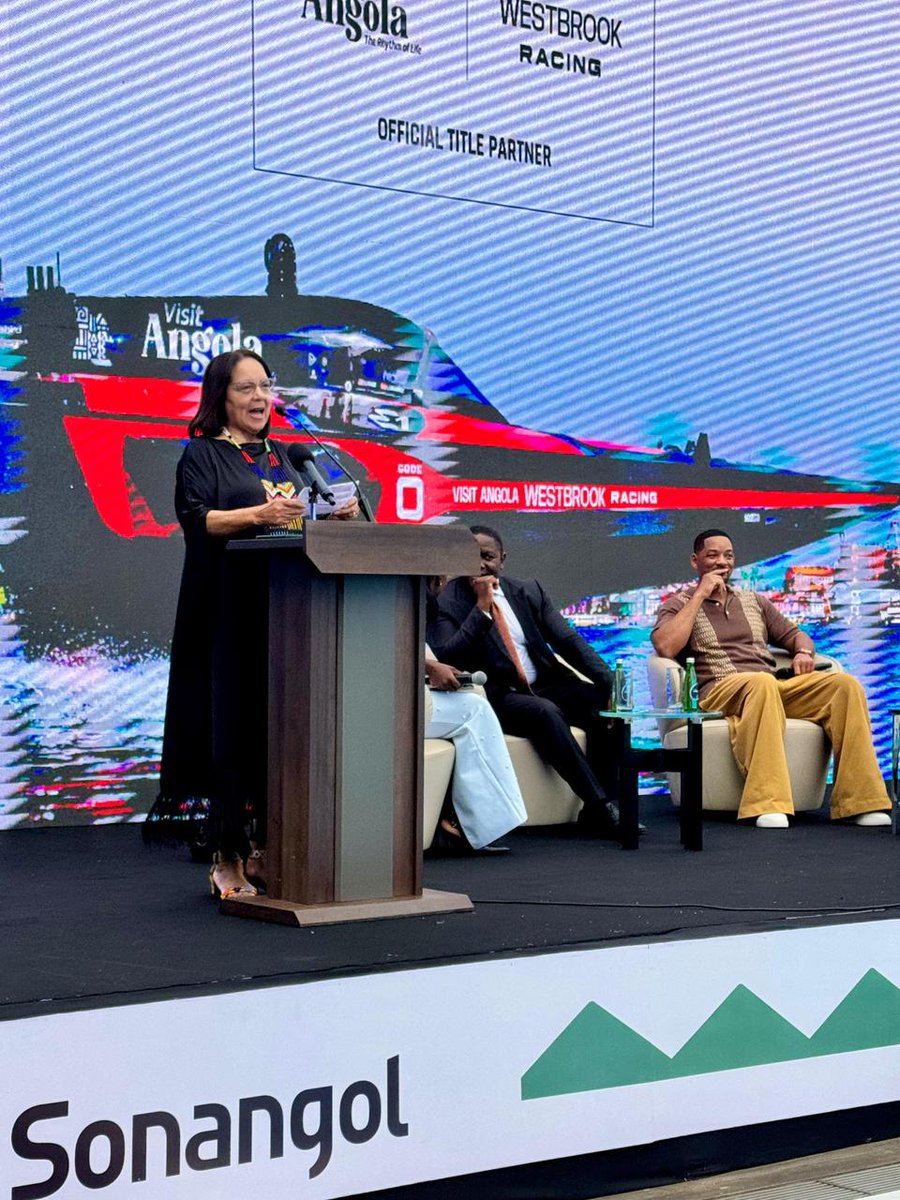
The E1 Grand Prix Event
While in Luanda, De Lille also attended the launch of the Luanda E1 Grand Prix. The inclusion of that event in her programme was deliberate.
South Africa has used the same logic domestically, LIV Golf South Africa and the Basketball Africa League are part of Gauteng’s events pipeline precisely because major international events draw attention, attract investors, and generate economic activity that outlasts the event itself.
Angola’s hosting of the E1 Grand Prix underscores how global sporting and lifestyle events serve as platforms to drive international visibility, attract high-value travellers and investors, and stimulate local economies. Angola hosting an international race series sends a signal to the global travel market that Luanda is open, capable, and ambitious.
The timing of this agreement fits within a wider pattern of African aviation opening up. Earlier this year, the Transport Convention Africa in Lomé advanced the Single African Air Transport Market, which targets the same structural barriers on a continental scale. The South Africa-Angola deal is that same logic applied directly at a bilateral level, two countries deciding not to wait for the broader process to catch up.
Angola’s own national tourism plan, PLANATUR, aims to double tourism revenues by 2027 while generating approximately 50,000 new jobs in the sector. A freer air corridor with South Africa its largest regional neighbour and most established tourism market, feeds directly into that target.
For South Africa, the deal builds on a record 10.5 million inbound arrivals in 2025 and a tourism strategy that is increasingly focused on African source markets rather than relying solely on long-haul visitors from Europe.