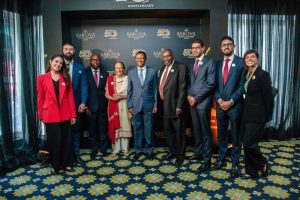
Madagascar’s military president, Michael Randrianirina, has announced that every candidate being considered for a ministerial role in his new government will have to pass a polygraph test before getting anywhere near a cabinet seat.

Speaking to reporters on Thursday, Randrianirina said the country had already acquired a polygraph machine and brought in a trained specialist to run the tests. The message was blunt: fail the test, and the interview does not happen.
“After taking the polygraph test, candidates who fail will not proceed to an interview,” he said. “Those who pass will have an interview with me and the prime minister.”
What made the announcement stand out was not just the polygraph plan, but the bar Randrianirina set for passing it.
“We are not looking for someone who is 100% clean, but someone who is more than 60% clean,” he said. “That way, Madagascar will finally be able to develop.”
The president added that the process would help identify “who is going to betray the youth struggle” a nod to the popular movement that brought him to power in the first place.
Randrianirina was a colonel in Capsat, an elite military unit, when youth protests shook Madagascar in late 2024. The demonstrations began in September over power and water cuts before expanding into a wider demand to dismantle a political system many young people considered broken and self-serving.
At least 22 people were killed in the early days of the unrest, according to the United Nations.
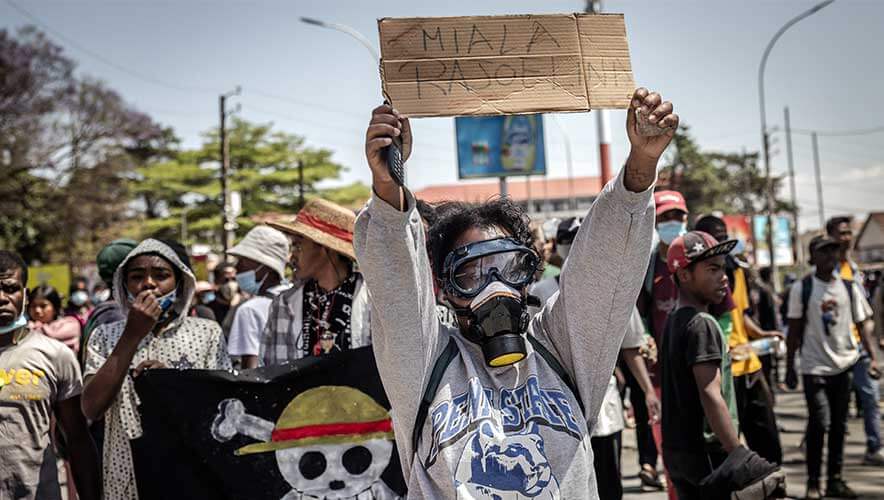
On October 11, Capsat publicly sided with the protesters. The following day, former president Andry Rajoelina reportedly left Madagascar for Dubai on a French military plane. Randrianirina was sworn in as interim president shortly after and has pledged to hold elections by late 2027.
On March 9, Randrianirina dismissed his entire prime minister and cabinet without publicly explaining why. Days later, on Sunday, he named Mamitiana Rajaonarison — previously the country’s anti-corruption chief — as the new prime minister.
The polygraph announcement followed on Thursday. Randrianirina said both he and Rajaonarison would conduct interviews with candidates who cleared the lie detector stage.
The youth movement that helped bring Randrianirina to power has had a complicated relationship with his administration from the start. Many activists were critical of his early appointments, seeing them as recycled figures from the Rajoelina era.
The polygraph plan has not settled those concerns.
One manager of Gen Z Madagascar’s social media accounts was direct in his assessment. “It’s not even scientifically proven to work,” he said. “For me it’s just a joke and embarrassing.”
He was careful to separate the criticism from a full rejection of the government. “We agree that the previous ministers weren’t good. We still have hope for the new ministers, but in general I think this regime is already better than the regime of Andry Rajoelina.”
Madagascar is one of the poorest countries in the world. According to World Bank data, its GDP per capita stood at just $545 in 2024. The island holds significant natural wealth like vanilla, precious gems, and other resources, but campaigners say those resources have long been siphoned off by corrupt officials and connected businesspeople rather than benefiting ordinary Malagasy.
In Transparency International’s 2025 Corruption Perceptions Index, Madagascar ranked 148 out of 180 countries.
That context is what gives the polygraph plan both its appeal and its limits. The frustration driving it is real. Whether a lie detector machine can address corruption at that scale is a different question entirely.
The new cabinet is expected to be announced early next week.