
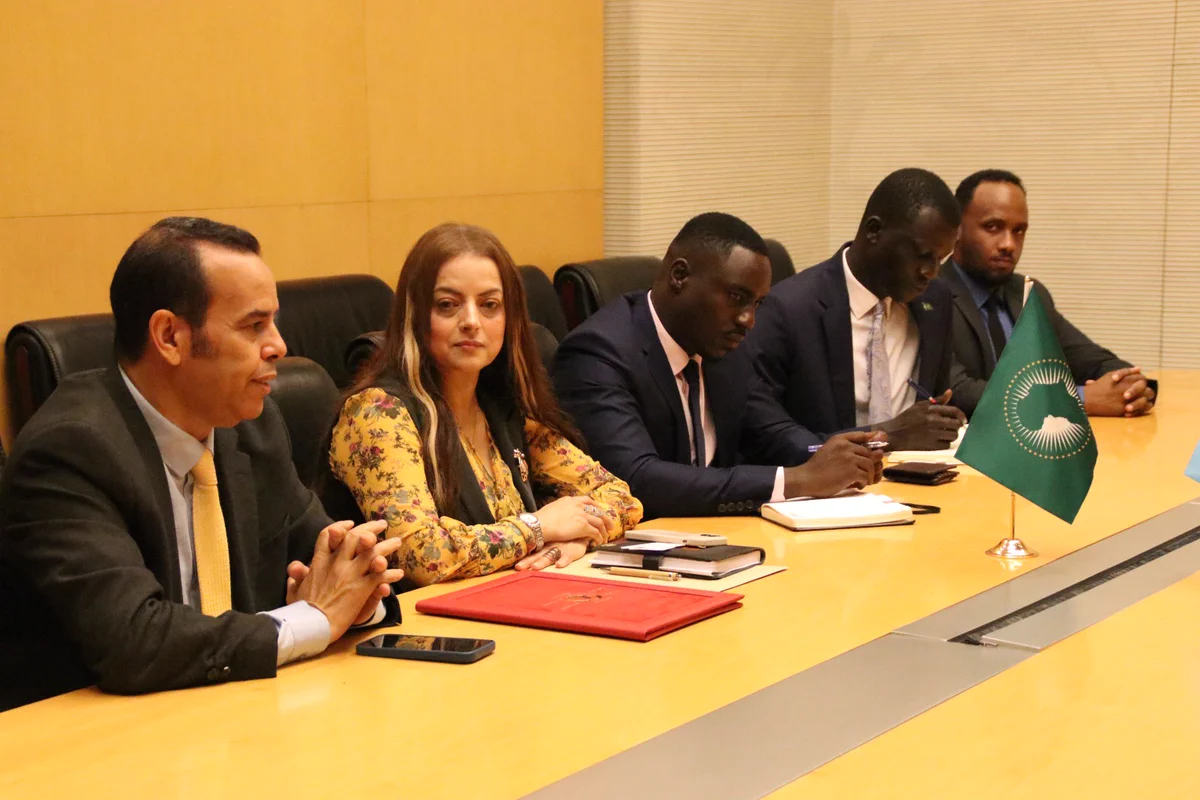
Somali enterprises can now export goods duty-free to a unified market of 1.4 billion consumers. Specifically, this historic entry fundamentally restructures the economic prospects of a nation historically isolated from formal continental value chains. By legally entering Africa’s single market, local businesses transition overnight to protected continental trade preferences. Therefore, a major milestone drives Somalia regional trade integration across the Horn of Africa. The Federal Republic of Somalia officially deposited its instrument of ratification for the AfCFTA agreement at the African Union Headquarters in Addis Ababa.
Stepping Into a $3.4 Trillion Free Trade Bloc
Minister of Commerce and Industry Gamal Mohamed Hassan submitted the formal documentation following federal parliamentary approval. This finalizes Somalia’s domestic legal requirements. Consequently, it makes the nation a state party with full rights under the pact. Somalia enters the agreement as the 50th State Party out of 54 signatories. This expansion anchors the country within a continental bloc boasting a combined Gross Domestic Product (GDP) of $3.4 trillion.
Therefore, this development aligns the nation’s trade architecture with the world’s largest free trade area by number of participating countries. This development directly removes a severe regulatory barrier: the lack of standardized Rules of Origin between Somalia and the rest of the continent. Historically, Somali exporters faced arbitrary customs valuations and punitive import duties. This barrier also persisted for decades because of institutional fragmentation, which effectively priced Somali processed goods out of regional markets.
Unlocking High-Demand Markets and Fisheries Potential
However, this regulatory shift creates an immense structural opportunity by granting formal access to high-demand markets like Kenya and Egypt. To exploit this opportunity, local businesses must meet strict compliance conditions. Specifically, they must align with strict origin rules. While updating custom systems presents an initial administrative cost, the real opportunity lies in transforming Somalia’s massive fisheries and agricultural potential into high-value supply chains.
This integration directly advances the African Union’s Agenda 2063 goals. In addition, it interfaces with East African Community trade protocols. But operational misalignment remains a concern because domestic financial institutions are still recovering from historic isolation. To fully capitalize on this policy shift, the government must rapidly integrate its commercial banks with continental financing mechanisms like the Pan-African Payment and Settlement System (PAPSS).
Supporting Small Cooperatives Against Marginalization
For formal corporate actors, the move offers a clear mechanism to scale operations and attract foreign direct investment. On the other hand, informal cross-border traders face steep compliance challenges. Because these independent merchants lack official paperwork, they risk being marginalized unless upcoming outreach strategies successfully simplify customs procedures for small unregistered cooperatives.
In conclusion, the current shift marks a turning point from economic isolation to structured pan-African integration. To finish this journey, harmonizing tariff books to transform legal access into active merchant shipping remains a practical necessity. For more updates on digital systems, check our guide on East African market challenges.
