
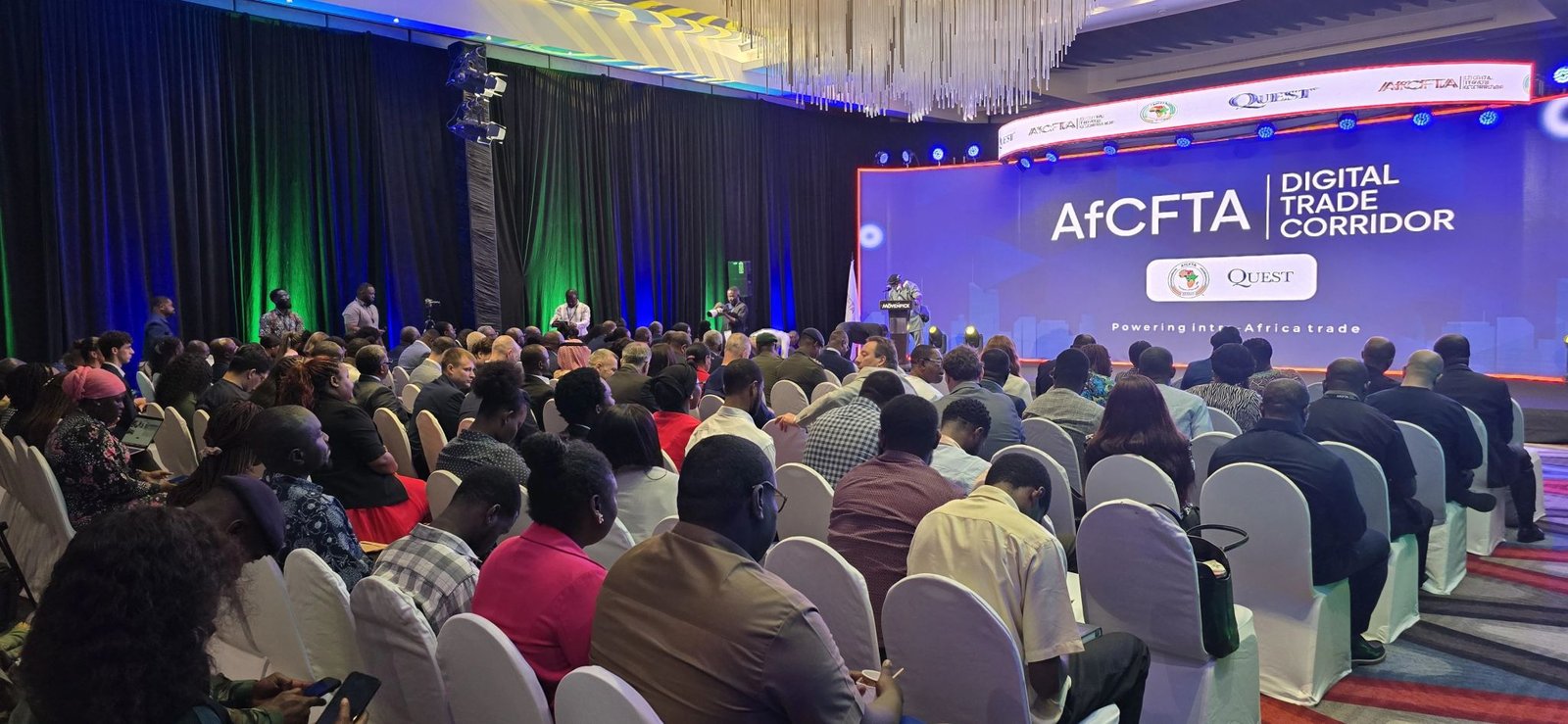
For an African exporter, finding a customer in another country does not mean the sale is complete. Payment may still have to pass through different financial systems. Specifically, fragmented logistics can make a simple cross-border transaction costly and uncertain. To fix this, a major new joint venture aims to build digital trade corridors across Africa to accelerate intra-African commerce. The AfCFTA Secretariat and Quest Ghana Limited signed a definitive $5.17 billion agreement. Headquartered in Seychelles, the mega-project will develop an electronic commodities exchange and a digital marketplace.
Connecting Online Markets and Interoperable Payments
The project comes as Africa attempts to turn a continental market of more than 1.4 billion people into a functional trading space. While the free trade treaty provides a framework for reducing trade barriers, businesses still face difficulties involving payments. Furthermore, they encounter differences in national systems. Therefore, this corridor could bring several stages of a cross-border transaction into a more connected environment.
A business could potentially find a buyer through a digital marketplace and arrange payment through an interoperable system. Consequently, this could reduce some of the transaction costs that discourage smaller African businesses from entering regional markets. But digital infrastructure alone cannot remove every physical barrier to intra-African trade. A digital platform cannot fix poor roads, border congestion, or unreliable electricity.
System Compatibility and Regional Infrastructure
Nevertheless, if the corridor simply adds another digital platform without connecting effectively with existing networks like PAPSS, it could worsen fragmentation. Consequently, the size of the investment is less important than whether it produces measurable reductions in trade times. From a policy perspective, the project is directly aligned with the AfCFTA’s core objectives. In addition, it complements Afreximbank’s work on cross-border payments through PAPSS to strengthen digital commerce.
However, the benefits of these new digital trade corridors Africa will differ between formal and informal economic actors. Registered exporters, manufacturers, and large logistics companies are more likely to have the technology required to use the new infrastructure. On the other hand, informal traders and very small businesses may face greater challenges. Because of limited digital skills, dependence on cash, and connectivity costs, they face a steep hurdle.
Bridging the Inclusion Gap
If these barriers are not addressed, digitalisation could make formal businesses more competitive without helping smaller traders. Thus, the $5.17 billion trade corridor represents an attempt to address a problem that tariff reductions alone cannot solve.
In conclusion, the project’s real significance will be determined by what businesses experience when they trade across borders. To complete this shift, connecting existing digital networks and making regional markets easier for MSMEs to access is essential to strengthen the single market. For more updates on digital systems, check our guide on East African market challenges.


