

In 2025, Eastern Africa witnessed a significant economic shift as Eastern Africa’s total exports surged by 14.5 percent. This figure jumps to 19 percent when excluding the Democratic Republic of Congo, as reported by the United Nations Economic Commission for Africa (UNECA). This momentum was mirrored in the intra-EAC trade sector, which accelerated past the $11 billion mark in 2024. This represents a robust 22 percent increase over 2023 figures, largely fueled by agricultural produce and manufactured goods.
Inside the Numbers: Why Eastern Africa’s Total Exports Surge
This growth coincided with a surge in export revenue derived from raw commodities. The World Bank and UNCTAD observed that global price spikes in gold and coffee disproportionately favored the region. With gold prices hitting $4,752.8 per ounce and Arabica coffee prices rising to $9 per kilogramme, Uganda, Tanzania, and Ethiopia saw their revenues receive a substantial boost. This pricing dynamic is the primary reason Eastern Africa’s total exports surge so aggressively across international markets.
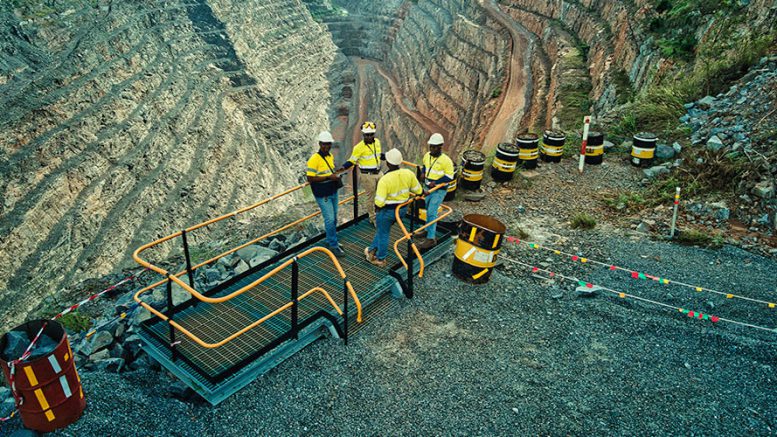
Beneath these figures, however, the composition of trade reveals a stark divergence. Raw minerals now claim 53 percent of Eastern Africa’s external exports. This is a significant rise from the 20 percent recorded in 2009. Meanwhile, the contribution of the manufacturing sector has sadly receded to just 17.5 percent. Despite this structural imbalance, intra-African trade grew by 8.5 percent. This performance far outshines the sluggish 0.4 percent export growth observed in markets beyond the continent.
The Raw Mineral Trap Choking Industrial Integration
For smaller enterprises, this regional market acts as a vital lifeline. While international exports remain tethered to unprocessed minerals, intra-EAC trade leans heavily into manufactured items. These include textiles, chemicals, pharmaceuticals, and cement. Yet, intra-regional trade accounts for only 12.1 percent of the EAC’s total exports. This metric underscores the massive, untapped potential awaiting development compared to other major global trading blocs. Reversing this trend will ensure Eastern Africa’stotal exports surge through finished goods rather than raw inputs.
The current surge in regional trade offers a critical opportunity to pivot away from volatile commodity dependence toward a future of value-added industrialization. Regional integration fosters accessible market conditions for agro-processors and manufacturers of consumer goods. This structural shift provides essential economic resilience. For instance, when global shipping costs soared due to geopolitical tensions, intra-EAC trade proved its worth by remaining largely uninterrupted.
Navigating the $100 Billion Squeeze on Local Exporters
Nevertheless, systemic barriers continue to persist, inflating the cost of doing business. Infrastructure deficits and punitive logistics costs still hamper the efficiency of value chains. The introduction of excise duties ranging between 10 and 15 percent on EAC imports by Tanzania under its 2025 Finance Act serves as a prime example. It shows how localized fiscal policies can inadvertently undermine the broader vision of integration and slow down the rate at which Eastern Africa’s total exports surge.
These challenges place the implementation of the African Continental Free Trade Area (AfCFTA) and the EAC Common Market Protocol under direct pressure. While governments are taking steps to build resilience, such as the bilateral agreements between Uganda and Kenya to dismantle non-tariff barriers, policy harmonization remains frustratingly inconsistent. A deeper commitment to AfCFTA is essential to secure preferential access to wider markets and to solidify recent economic gains.
For the informal cross-border traders who anchor local economies, these systemic inefficiencies are particularly damaging. Small-scale operators are forced to pay steep premiums, bearing the brunt of deteriorating roads, congested transport corridors, and bureaucratic customs delays. Although digital documentation is slowly beginning to replace outdated paper-based systems, these traders continue to struggle with fragmented infrastructure.
Compounding these logistical hurdles is an acute squeeze on liquidity. Afreximbank’s 2025 Trade Report estimates a staggering annual African trade finance gap of $100 billion. This deficit severely curtails credit access for SME exporters. Paradoxically, securing trade finance for intra-African transactions remains more expensive and more difficult than obtaining financing for exports bound for Europe or Asia. Resolving this banking friction is the final step required to make Eastern Africa’stotal exports surge sustainably for decades to come.