

Nigerian manufacturers and refiners are increasingly looking inward to the African continent for growth. They are shifting their gaze away from traditional overseas markets. Driven by recently enacted tariff concessions and targeted logistics investments, cross-border commerce is becoming a tangible operational reality rather than a mere policy ambition. This shift is lowering costs for local businesses and putting more regional products on African shelves. The growth has caused a massive wave of movement in the nation’s total intra-African trade volume.
The Afreximbank Trade Report: Inside Nigeria’s Non-Oil Boom
According to the newly released African Trade Report 2026 published by the African Export-Import Bank (Afreximbank), the value of Nigeria’s trade with other African nations increased from $7.47 billion in 2024 to $9.02 billion in 2025. This 21 percent surge positions Nigeria as one of the continent’s key drivers of regional commerce. The growth is fueled by its traditional crude oil exports and an expanding basket of non-oil manufactured goods. These include cement, urea, plastics, and processed foodstuffs. All of these sectors contributed heavily to expanding Nigeria’s intra-African trade volume.
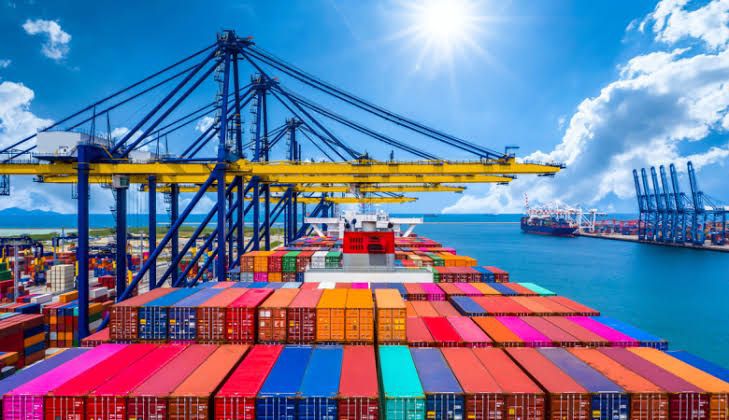
The expansion was catalyzed by Nigeria officially gazetting its Provisional Schedule of Tariff Concessions in April 2025. This regulatory mechanism enabled Nigerian goods to qualify for preferential tariffs across participating African Continental Free Trade Area (AfCFTA) member states. It also granted reciprocal access for incoming African imports. Simultaneously, new physical logistics initiatives were deployed to facilitate this movement of goods. This includes a dedicated air cargo corridor connecting Nigeria to East and Southern Africa.
From Paper to Fuel: Tariff Concessions and the Dangote Effect
This development represents definitive progress within the AfCFTA’s implementation trajectory. It transitions the agreement from a diplomatic milestone into a functioning trade mechanism. For years, the promise of the AfCFTA has depended on the execution of tariff schedules. It relied on the Guided Trade Initiative, which was designed to stress-test trade protocols in real-world scenarios. Nigeria’s integration into this active preferential trading framework brings massive industrial weight to the agreement. It validates the economic thesis that systematically reducing barriers stimulates a larger Nigeria’s intra-African trade volume.
Crucially, this growth reflects a deliberate pivot toward regional value chains and import substitution. Global supply chains are increasingly fragmented by geopolitical conflicts and disruptions in the Red Sea-Suez Canal corridor. Because of this, localizing trade offers a necessary buffer against external shocks. The uptick in Nigeria’s intra-African trade volume underscores a structural transition. African economies are beginning to rely on each other for essential inputs like refined petroleum products. This is driven notably by domestic infrastructure like the Dangote Refinery operating at near-full capacity.
The $74 Billion Financial Wall Choking Continental Exports
The broader continental data contextualizes the scale of this momentum. By 2025, 49 out of 54 African Union member states had deposited their instruments of AfCFTA ratification. Total intra-African trade expanded by approximately 5.5 percent to $213.8 billion. However, the continent’s trade finance gap remained elevated at roughly $74 billion in 2025, according to the African Development Bank. This serves as a stark reminder of the financial hurdles that continue to constrain export potential across the region.
Despite these headline gains, a severe implementation gap persists at both national and continental levels. While 48 provisional schedules of tariff concessions have been adopted, only 17 countries have submitted full tariff schedules covering all categories. Furthermore, West Africa alone continues to sit on slightly more than $7 billion in unrealized intra-African export potential due to persistent structural constraints. These include severe deficits in cold chain infrastructure, quality standardization, and cross-border logistics. Without resolving these fundamental capacity deficits, the region risks slowing down the current momentum of Nigeria’s intra-African trade volume growth.