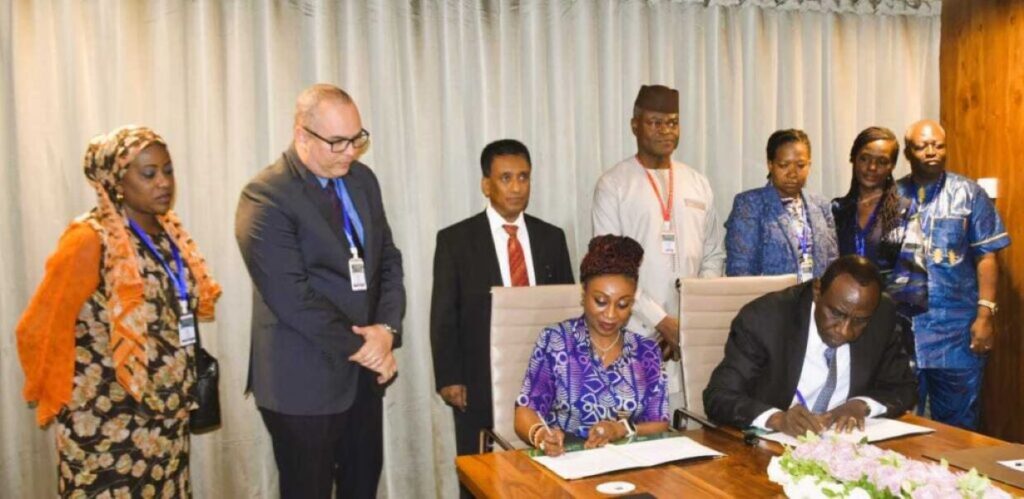
On Wednesday, June 17, 2026, the Togolese government and the African Civil Aviation Commission (AFCAC) signed a major agreement in Lomé. This historical pact will advance the implementation of the Single African Air Transport Market (SAATM). The deal was formally executed by Togo’s Transport Minister, Komla Loukou-Kadjé, and AFCAC Secretary General Adefunke Adeyemi. They met on the margins of the 2026 African Air Transport Convention and Exhibition. This strategic move directly transforms Togo regional air connectivity.
The Lomé Agreement: Moving from Policy to Real Flights
This agreement establishes a structured roadmap and action plan to monitor commitments. It includes periodic ministerial meetings to review aviation measures and determine operational steps. According to Minister Loukou-Kadjé, the primary objective is to facilitate free airline operations across borders. This move supports Togo’s ambition to establish its capital as a premier regional logistics and aviation hub. Improving Togo regional air connectivity is the central anchor of this master plan.

The deal arrives at a critical juncture for African air connectivity. The gap between policy intent and operational reality remains significant. While 38 African Union Member States have signed the SAATM solemn commitment, only 12 have completed the necessary regulatory alignment to grant operational open access. Of the remaining signatories, 16 states have only partially implemented the framework. Sadly, 10 nations have shown no demonstrable operational change at all.
Togo Regional Air Connectivity.: The Truth About African Air Regulation
Despite these inconsistencies, intra-African connectivity is making measurable progress. AFCAC route statistics indicate that 124 new intra-African routes have been launched recently. This includes 22 vital Fifth Freedom routes. Consequently, the continent’s Fifth Freedom traffic capacity has grown from 14.5% in 2018 to 23% in 2025. Projections show it will reach 30% by 2028. This expansion will naturally turbocharge Togo regional air connectivity by opening up new destinations.
Highlighting the macroeconomic impact of this drive, AFCAC data from June 2026 notes that the SAATM network currently serves over 3 million passengers. The framework includes 113 African airlines. This liberalization is linked to an estimated GDP contribution exceeding $75 billion. It supports approximately 8.1 million jobs and enabled 81 million tourism travelers in 2025.
Togo has already demonstrated the viability of such measures through its 2018 bilateral agreement with Rwanda. That historical deal allows carriers like RwandAir and ASKY Airlines to operate direct flights without frequency restrictions. It proved that open skies instantly build robust Togo regional air connectivity.
Open Skies, More Jobs: The Economic Power of Liberalisation
By shifting focus from high-level political endorsement to granular execution, the new Togo-AFCAC agreement directly advances SAATM commitments. The pact actively targets the removal of market access barriers. It also improves the administrative predictability needed for airline designation and route commencement.
Through its mandate for a monitored roadmap and action plan, the deal addresses the SAATM requirement for states to align air service agreements with liberalized principles. This clear framework ensures transparent follow-up, guaranteeing that Togo regional air connectivity will continue to soar.