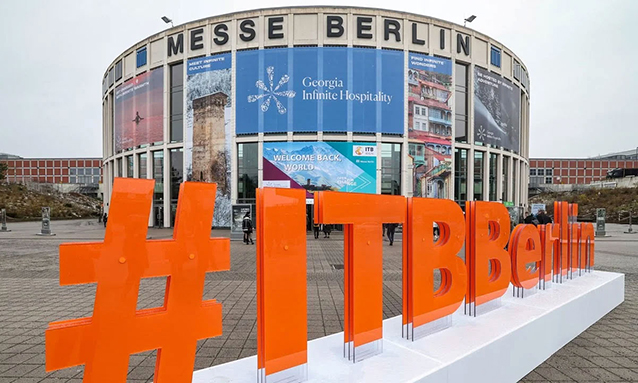
The 60th anniversary of ITB Berlin did not just celebrate six decades of the travel industry. It announced the arrival of Africa as a dominant force in global tourism, and with receipts to prove it.
Over €47 billion in business deals. Nearly 97,000 attendees. Exhibitors from 166 countries. Those are the headline numbers from Messe Berlin, March 3–5, 2026. But for anyone watching the African delegations closely, the real story was not in the totals but in the details. Signed contracts. Diplomatic agreements. A 14-year absence ended. A continent that stopped asking for a seat at the table and simply pulled one up.
Here is exactly what happened, why it matters, and what it means for the future of African tourism investment.
1. Angola: Africa’s Fastest-Growing Destination
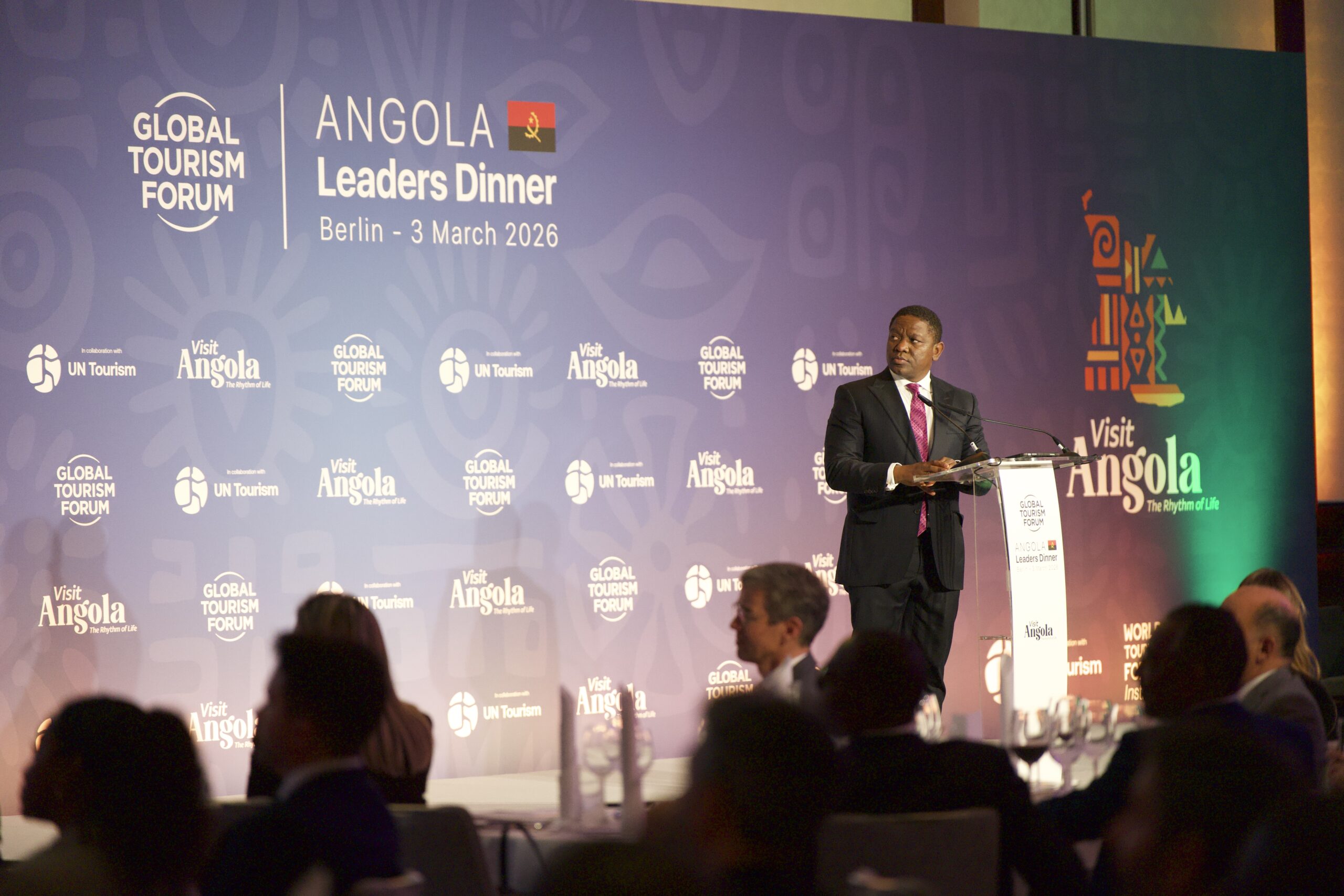
Angola made history at ITB Berlin 2026 by becoming only the third African nation in 60 years to serve as the event’s official host country. Under the slogan “Visit Angola: The Rhythm of Life,” the delegation made sure they commanded the room.
The numbers they brought to Berlin were difficult to ignore. A 30% increase in international arrivals in 2025. A ranking of fourth globally among the fastest-growing tourism destinations. $667 million in sector revenue. These are not projections or aspirational targets but verified figures from a country that, a generation ago, was still navigating the aftermath of civil war.
Tourism Minister Márcio de Jesus Lopes Daniel addressed that history directly when journalists raised it. His response was not defensive — it was strategic. Angola, he argued, is actively redefining its image, strengthening regional partnerships with Namibia and Zimbabwe, and working toward multi-country visa cooperation that would allow travellers to move across Southern Africa with far less friction.
The government’s next move is the Global Tourism Forum Investment Summit in Luanda, May 7–9, 2026, where hotel groups, infrastructure developers and financial institutions will explore what is increasingly being called a genuine investment frontier. Minister Daniel’s framing of the sector as Angola’s “green oil”, a sustainable engine to reduce petroleum dependency is a policy direction backed by budget allocations and international partnerships. Conversations about a future “ITB Africa” anchored in Luanda are already underway.

2. Morocco: Aviation Strategy and Commercial Dealmaking
Morocco came to Berlin with a plan. Yes, a plan, with airline executives, tour operator representatives and contract-signing ceremonies already scheduled before the fair opened its doors.
The Moroccan National Tourism Office (ONMT) deployed a 1,000 square metre pavilion, assembling more than 140 tourism professionals representing regions including the Oriental, Fès-Meknès and Souss-Massa areas. The scale was deliberate. So was the agenda. Morocco concluded capacity agreements with Condor, Eurowings and Discover Airlines, while Royal Air Maroc simultaneously announced new services linking Nador to Frankfurt and Düsseldorf. Combined with the recently launched Casablanca–Munich route, the result is a 34% increase in air capacity between Morocco and Germany for the 2025–2026 season.
On the commercial side, Morocco strengthened its long-standing partnership with TUI Group and signed a new three-year strategic agreement with DER — Germany’s second-largest tour operator, targeting a 25% increase in sales. The foundation for those targets is already laid. Over 930,000 German tourists visited Morocco in 2025, an 11% year-on-year rise, making Germany Morocco’s seventh-largest source market globally.

3. South Africa and Kenya: The “United Africa” Tourism Model
Something historic happened at ITB Berlin 2026 that did not get nearly enough attention. South Africa and Kenya signed a Memorandum of Understanding on bilateral tourism cooperation, and in doing so, reframed what African destination strategy can look like.
Deputy Minister of Tourism Maggie Sotyu led a South African delegation of 49 exhibitors — airlines, tourism authorities, destination management companies and accommodation providers. Twenty-two small, medium and micro enterprises attended through the Department of Tourism’s Tourism Incentive Programme, with two additional Limpopo-based SMMEs supported by the Limpopo Tourism Agency. The delegation was large, structured and commercially focused.
But the MoU was the headline. Its premise is straightforward and overdue: rather than competing for the same European traveller, South Africa and Kenya are committing to building coordinated, cross-border tourism value. A visitor to Johannesburg becomes a potential visitor to Nairobi. A safari in the Maasai Mara connects to a wine route in the Western Cape. The product is no longer a single country — it is a continent.
4. Akwaaba’s Comeback After 14 Years
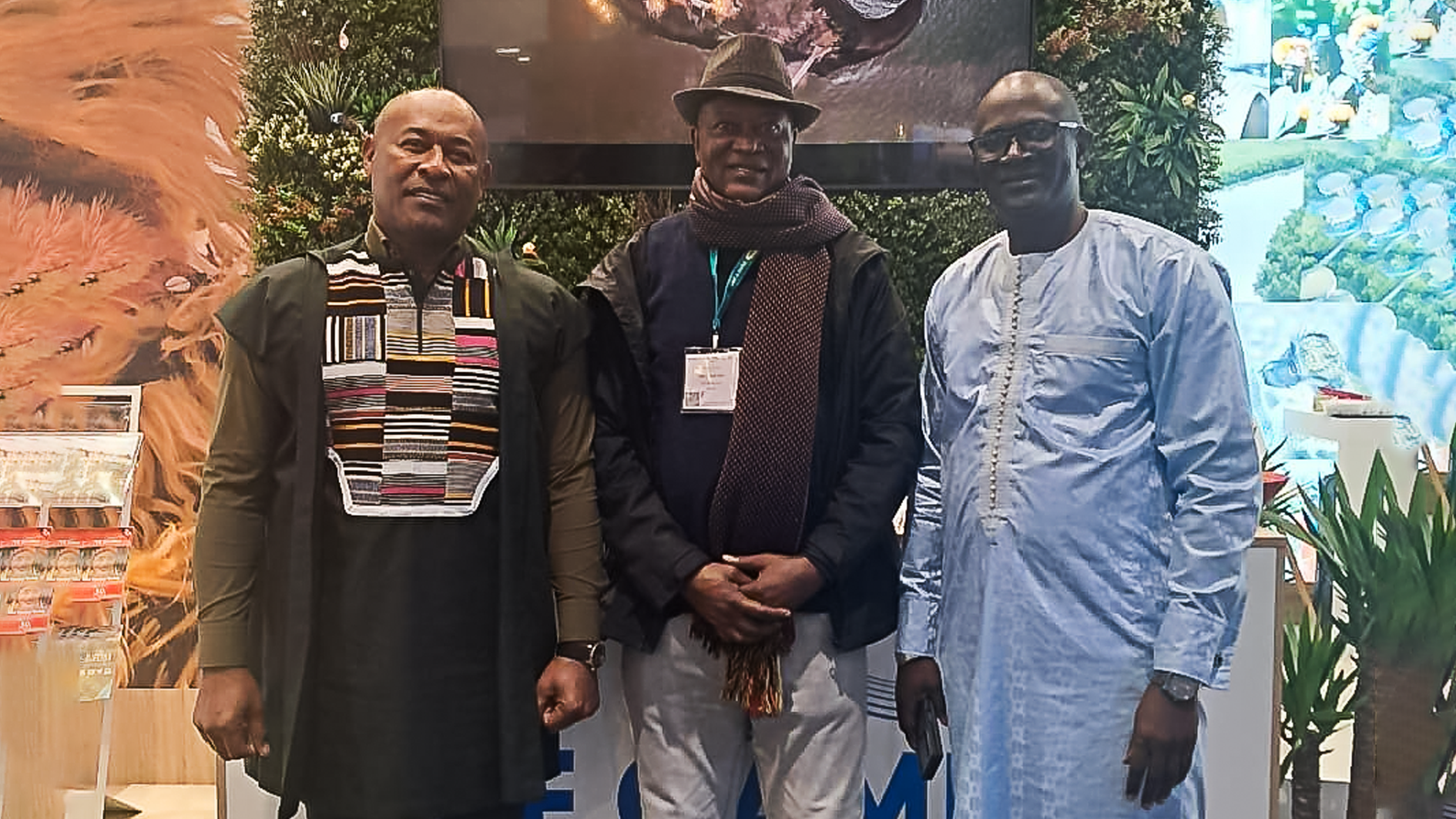
Fourteen years is a long time to be absent from the world’s most important tourism trade fair. When the Akwaaba African Travel Market returned to Messe Berlin in March 2026, the return was not accidental, it was engineered.
Founded 22 years ago by Ambassador Ikechi Uko, Akwaaba is West Africa’s premier international travel expo. Its last appearance at ITB Berlin was 2012. The decision to return in 2026, the year Angola held host country status and Africa commanded the event’s loudest spotlight was as much a statement as a strategy. West Africa was not going to let this moment pass without a direct voice in it.
On the ground, the Akwaaba stand functioned as a live connectivity hub. Nigerian and West African delegates held discussions with aviation executives, tourism ministers and international investors throughout the fair. Elizabeth Agboola of NTT Global Destinations who previously led the first direct air connectivity corridor between Nigeria and Jamaica held meetings in Berlin with Royal Jordanian’s Chief Commercial Officer Karim Makhlouf, Jamaica’s Tourism Minister Edmund Bartlett, and Angola’s own Tourism Minister. Each conversation was a thread in a larger web of Africa-linked trade and aviation diplomacy.
Agboola’s framing of where the industry is heading is worth quoting directly: “Tourism today is no longer simply about travel. It sits at the intersection of trade, aviation, culture and diplomacy.” That is the operating philosophy behind Akwaaba’s return, and behind the Akwaaba Lagos edition, scheduled for September 13–15, 2026, which is expected to be a landmark homecoming event.
5. Ghana
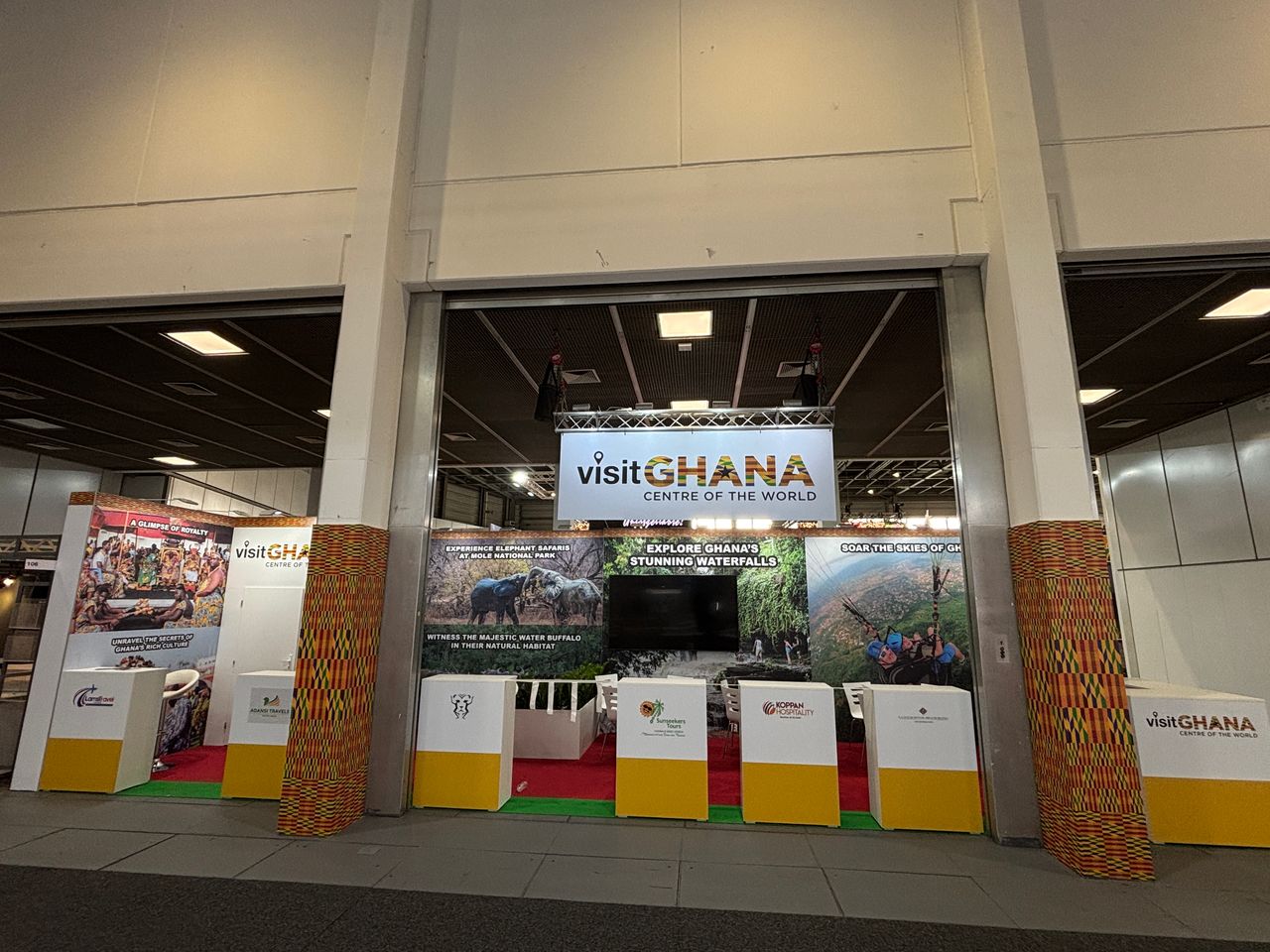
Of all the African delegations at ITB Berlin 2026, Ghana’s approach stood out for something rare in international tourism promotion — honesty before optics.
Before the fair officially opened, the Ghana Tourism Authority did not rush to the exhibition floor. Instead, it convened a frank session with young Ghanaian professionals and potential investors based in Germany, organised by V Afrika-Verein in collaboration with the Ghana Embassy and attended by Ambassador Prof. Ohene Adjei. Infrastructure gaps, customer service standards, and documentary processing delays were put on the table and addressed directly.
That approach matters because investor confidence is fragile. A single awkward conversation about unresolved operational issues can undo weeks of promotional activity. Ghana chose to have that conversation first, in private, and on its own terms, which is exactly what a destination serious about long-term investment credibility does.
Seven private sector participants exhibited alongside government officials throughout the fair. Ghana Day featured cultural performances, culinary showcases and structured B2B sessions. The consistent positioning throughout — political stability, rich cultural heritage, and a gateway role into Africa’s wider tourism and investment markets — gave Ghana a coherent identity in a week crowded with competing narratives.
Ghana’s decision to address investor concerns before stepping onto the global stage is a masterclass in reputation management. Build credibility before you build awareness. The destinations that earn trust before they earn tourists are the ones that build something sustainable.
6. Benin
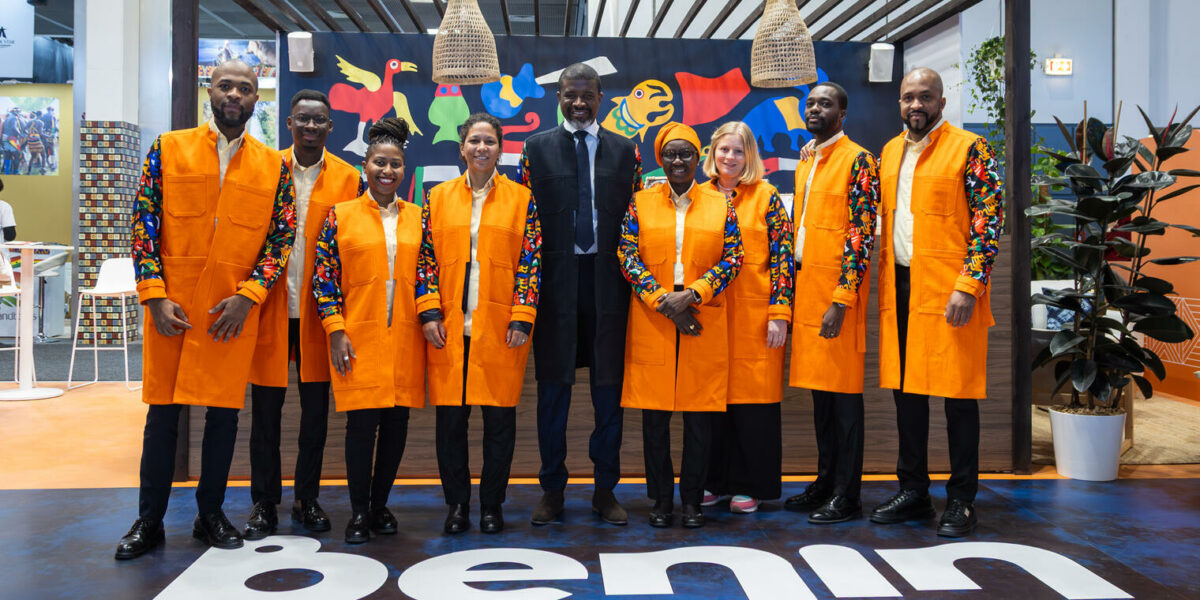
Benin did not arrive at ITB Berlin 2026 trying to be everything to everyone. That restraint is, in itself, a strategy and one worth recognizing.
The Benin Tourism Agency presented the country’s cultural and heritage assets to an international audience that, for many, was encountering Benin as a tourism destination for the first time. The Royal Palaces of Abomey, a UNESCO World Heritage Site preserving the legacy of the Dahomey Kingdom were front and centre. So was the coastal city of Ouidah, a historically significant site with museums and cultural festivals, and Pendjari National Park, a flagship nature tourism asset in the country’s north.
There were no inflated arrival numbers or sweeping investment pledges. Benin’s pitch was clear, focused and honest: a culturally rich, heritage-forward destination building a meaningful offer for the growing segment of international travellers who prioritise depth and authenticity over mass-market familiarity. That is a real and growing market, and Benin is positioning early to capture it.
In a world of overcrowded “bucket list” destinations, focused authenticity is a competitive advantage. Benin is not trying to be Kenya or Morocco. It is trying to be the destination that serious cultural travellers find before everyone else does. And that is a smart place to start.
What ITB Berlin 2026 Proved About Africa’s Tourism Future
The 60th anniversary edition of ITB Berlin generated €47 billion in business deals despite global geopolitical instability and Middle East flight disruptions. The travel industry’s commitment to face-to-face engagement held and Africa showed up to that commitment better prepared than at any point in recent memory.
Angola commanded the global stage. Morocco signed contracts that will move hundreds of thousands of additional European travellers through its airports. South Africa and Kenya formalized a cooperation framework that could redefine how African destinations go to market together. Kenya priced its investment opportunity and put it in front of the right people. Ghana built credibility before building awareness. Akwaaba ended a 14-year absence. And Benin introduced itself to a world that is increasingly ready to listen.
The Maldives has been confirmed as ITB Berlin’s host country for 2027. The spotlight will shift geographically. But Africa has made something clear in Berlin this year — it is no longer waiting to be discovered, and it is no longer competing for scraps of the global tourism market. It is building on its own terms, at its own pace, with its own vision.
The “green oil” era of African tourism has begun. The question is not whether to pay attention. The question is whether you can afford not to.
Reporting draws on proceedings at ITB Berlin 2026, Messe Berlin, March 3–5, 2026, and official statements from participating delegations. For official ITB Berlin data, visit itb.com.

